NASA astronaut Chris Williams is all smiles in this July 26, 2026, photo taken shortly after he landed with Expedition 74 Roscosmos cosmonauts Sergey Kud-Sverchkov, and Sergei Mikaev in Kazakhstan. This was Williams’ first mission.
Williams spent eight months aboard the International Space Station, where he supported a wide range of scientific investigations and technology demonstrations. He also completed two spacewalks to prep for space station power system upgrades and to replace a faulty joint on the Canadarm2 robotic arm.
Image credit: NASA/Bill Ingalls
Each time the Moon covers the Sun during a total solar eclipse — darkening daytime skies and briefly revealing the Sun’s ethereal outer atmosphere, the corona — it presents new opportunities to better understand our star and its influence on Earth.
On Wednesday, Aug. 12, as the next total solar eclipse sweeps over Greenland, Iceland, and Spain, NASA-funded science teams will be chasing the Moon’s shadow with a high-altitude jet and scientific balloons to investigate the Sun’s dynamics and how the temporary darkening of our skies affects our atmosphere.
“From our unique perspective on Earth during a total solar eclipse, scientists can study the Sun’s corona in a way we can’t from anywhere else in the solar system,” said Kelly Korreck, eclipse program manager at NASA Headquarters in Washington. “The Sun impacts our daily life, satellites, and astronauts in space, and we can take advantage of this moment to advance our understanding of that influence.”
Soaring in the nose cone of NASA’s WB-57 high-altitude research aircraft is a suite of four cameras to take high-resolution images of the corona in several different wavelengths of visible and infrared light. Part of an instrument developed by the NASA Scientifically Calibrated In-Flight Imagery (SCIFLI) team at NASA’s Langley Research Center in Hampton, Virginia, the cameras will capture at least 20 images per second, recording structures, outflows, and rapid changes in the corona during the total solar eclipse.
With these images, scientists hope to learn more about the formation of prominences (solar material that gets suspended above the Sun’s surface), better understand the corona and how it gets heated to nearly a million degrees, and investigate how material in the corona and the solar wind are related, which flows out from the Sun across the solar system.
By chasing the Moon’s shadow, the jet will extend how long the cameras can observe the corona. On the ground, the longest anyone will be able to see the corona is two minutes and 18 seconds. But flying along the eclipse path at 460 miles per hour, the jet’s view of the corona will last nearly three minutes.
NASA’s WB-57 will fly at 50,000 feet, above any clouds that might obscure the view of the corona from the ground. The altitude also allows the cameras to observe some infrared wavelengths that get absorbed by the lower atmosphere before reaching the ground, and the corona only has been observed in those wavelengths a few times before.
The instrument, called SCIFLI Multispectral Airborne Imager, or SAMI, also flew on a WB-57 during the total solar eclipse on April 8, 2024, providing valuable imagery and information about the corona. However, the study’s principal investigator, Amir Caspi of the Southwest Research Institute in Boulder, Colorado, says each total solar eclipse provides new opportunities to learn more about the corona.
“The Sun is always changing,” Caspi said. “Every eclipse is different. So we could see things we didn’t see before. And we learn from each eclipse how to better observe the next one.”
Caspi’s team also is making some enhancements for the 2026 campaign based on lessons learned in 2024. For example, the team will adjust exposure times to better capture bright features that were overexposed in 2024 imagery. They will also leverage software developed since 2024 to process and analyze the data sooner than before.
The experiment is funded by NASA’s Heliophysics Low Cost Access to Space Program.
[embedded content]
When a total solar eclipse suddenly turns daytime skies dark, our atmosphere changes in ways we don’t yet fully understand.
The NASA-supported Nationwide Eclipse Ballooning Project, led by Angela Des Jardins at Montana State University, is sending students from several U.S. universities to Iceland and Spain to launch scientific balloons before, during, and after the eclipse to better understand those changes.
In Iceland, two teams will launch a total of 80 balloons starting 18 hours before the eclipse until eight hours afterward to study how the eclipse affects Earth’s “boundary layer,” the part of the atmosphere that touches the ground. The thickness of the boundary layer changes depending on factors such as surface temperature and moisture in the air.
Previous balloon flights during solar eclipses in October 2023 and April 2024 showed that the boundary layer collapsed, or decreased in thickness, in locations with clear skies but not where there were cloudy skies. Scientists wonder whether that will be different in Iceland in 2026. Changes in the boundary layer are driven by the day-night cycle. However, in Iceland in August, the days are long and nights are short, so the nighttime influences might not be as strong as in 2023 or 2024.
“Will this eclipse be able to collapse the boundary layer?” said Matthew Bernards, a chemical engineering professor at the University of Idaho, who leads one of the Iceland teams.
In Spain, three balloon teams will launch a total of six balloons with 360-degree cameras to image the eclipse shadow from above. These balloons also will include instruments designed to measure levels of ozone in the atmosphere, which requires sunlight to form. Similar balloon experiments showed that ozone decreased during totality in April 2024. Scientists wonder whether there will be differences with this eclipse, particularly since it happens at a later time of day and during a different season.
[embedded content]
While the total solar eclipse won’t be visible in the U.S., some parts of the country will be able to see a partial solar eclipse. Learn more about where to see the eclipse and how to view it safely.
by Vanessa ThomasNASA’s Goddard Space Flight Center, Greenbelt, Md.
WASHINGTON — On June 10, officers from ICE Washington arrested Sebastian Mihai Caraba, a Hungarian-Romanian national who overstayed his visa who was wanted in Fairfax, Virginia, for illegal use of credit cards. ICE’s Fugitive Operations Team identified Caraba and his vehicle and followed him to a location he had been frequenting in Washington. Caraba identified himself verbally, and officers apprehended him without incident.
Caraba was convicted abroad for illegal use of credit cards and sentenced to three years in prison.
“Sebastian Mihai Caraba had already been convicted overseas for the same type of fraud he is now accused of committing here in the United States,” said acting ICE Director David J. Venturella. “Instead of respecting the terms of his admission, he overstayed his visa and allegedly returned to the same criminal conduct. ICE will continue to identify, locate and arrest fugitives and immigration violators who threaten the safety and security of our communities.”
Caraba entered the U.S. Aug. 11, 2018, on the Visa Waiver Program via San Juan, Puerto Rico. He had visited the United States twice previously under the same program and left within the authorized period.
A Department of Justice immigration judge issued Caraba a final order of removal June 22, 2026. He will remain in ICE custody until he is removed from the United States.
You can report crimes and suspicious activity by dialing 866-DHS-2-ICE (866-347-2423) or completing the online tip form.
CBO projects that the military’s fighter fleet will shrink from about 3,300 aircraft now to about 3,000 by 2029 and then grow to 3,600 aircraft by 2040. Starting in 2033, more than half the fleet will be harder-to-detect stealthy aircraft.
Source: US Department of Health and Human Services – 3
Summary
Company Announcement Date:
July 24, 2026
FDA Publish Date:
July 27, 2026
Product Type:
Drugs
Reason for Announcement:
Recall Reason Description
Products were found to contain particulate matter
Company Name:
American Regent, Inc.
Brand Name:
Brand Name(s)
American Regent, Inc.
Product Description:
Product Description
Papaverine Hydrochloride Injection, USP 60 mg/ 2 mL
Company Announcement
July 24, 2026 – Shirley, NY, American Regent, Inc. is conducting a nationwide voluntary recall of a single lot of Papaverine Hydrochloride Injection, USP, 60 mg/2 mL single dose vial to the consumer level. The product is being recalled due to the presence of particulate matter identified as glass and/or paraformaldehyde.
Risk Statement: The administration of an injectable product containing particulate matter may result in local irritation or swelling. The particulate matter could travel through and block blood vessels in the heart, lungs or brain which can cause stroke and even lead to death. Patients with underlying cardiovascular or pulmonary compromise may be at increased risk. To date, American Regent, Inc. has not received any reports of adverse events related to this recall.
Papaverine is a prescription medication that relaxes smooth muscles and widens blood vessels, primarily used to treat visceral spasms, poor blood circulation, and erectile dysfunction. Papaverine Hydrochloride Injection, USP, is a clear, colorless pale-yellow solution and is available in a 2 mL single-dose vial containing 30 mg/mL
Papaverine Hydrochloride Injection, USP Lot # 25202 was distributed nationwide in the United States beginning September 30, 2025. NDC, lot, expiration date and distribution dates can be found on the table below.
Product Description: Papaverine Hydrochloride Injection, USP 60 mg/2 mL Single dose vialNDC: 0517-4002-25Lot#: 25202Expiration Date: 11/30/2026Distribution Dates: 9/30/2025
American Regent, Inc. is notifying its distributors and customers by letter and is arranging for return/replacement etc. of all recalled products.
Distributors/retailers/healthcare facilities that have the product which is being recalled should stop using and return to place of purchase or discard the product.
Consumers and healthcare professionals with questions regarding this recall can contact American Regent Inc. using the below information. This product is an intravenous injection and is to be used by or under the direction of a physician. Patients that use this product which is being recalled should stop using them and contact their doctor or health care provider.
Consumers should contact their physician or healthcare provider if they have experienced any problems that may be related to taking or using this drug product.
Contact Center
Contact Information
Area of Support
American Regent, Inc. Customer Service
Phone: 800-645-1706 (8:00AM-6:00PM EST, Monday – Thursday, 8:00AM-4:00PM EST, Friday)
For detailed return/replacement/credit information
American Regent, Inc. Pharmacovigilance
Phone: 800-734-9236 Email: pv@americanregent.com
To report adverse events
American Regent, Inc. Product Quality Complaints
Phone: 888-354-4855 (9:00AM-5:00PM EST, Monday – Friday) Email: pqc@americanregent.com
For product quality complaints
American Regent, Inc. Medical Information
Phone: 888-354-4855 (9:00AM-5:00PM EST, Monday – Friday) Email: ma@americanregent.com
For medical questions
Adverse reactions or quality problems experienced with the use of this product may be reported to the FDA’s MedWatch Adverse Event Reporting program either online, by regular mail or by fax.
This recall is being conducted with the knowledge of the U.S. Food and Drug Administration.
American Regent, Inc. is committed to the safety of patients who rely on its products and is taking this precautionary action to protect public health.
WASHINGTON — The Department of Veterans Affairs this weekend will honor 49 Veterans of the Revolutionary War who are interred or memorialized in VA national cemeteries or VA-administered soldiers lots in private cemeteries, as part of the yearlong effort to commemorate America’s 250th anniversary.
While Declaration of Independence was adopted by the Continental Congress July 4, 1776, most delegates signed it on Aug. 2, 1776. To mark that event, ceremonies will commence at 10 a.m. local time, Aug. 2, 2026, at 16 sites across the country:
“Service, sacrifice and patriotism are qualities displayed by our Veterans going back to the very founding of our nation,” said VA Under Secretary for Memorial Affairs Sam Brown. “Two hundred and fifty years later, we remain inspired by those who first took up arms in defense of liberty, and who, like the signers of the Declaration of Independence, risked their lives, their fortunes and their sacred honor to establish the United States of America.”
View VA Under Secretary for Memorial Affairs Sam Brown’s invitation to join the events here.
Veterans can also use our chatbot to get information about VA benefits and services. The chatbot won’t connect you with a person, but it can show you where to go on VA.gov to find answers to some common questions.
I am from Cary, North Carolina. I grew up with my parents and two sisters. Cary is home to my favorite park, Downtown Cary Park, which is overlooked by a beautiful public library.
What is your academic/professional history?
I am a rising senior at Duke University, pursuing a double major in history and political science. Academically, I am interested in legal history, international human rights, and the frameworks surrounding humanitarian aid.
I have professional experience in the museum and history fields. I previously worked as a co-curator for the Museum of Durham History and as a research grant awardee for the Duke Human Rights Center. These experiences spurred my love for archival materials! Additionally, I have developed strong research and database skills through roles at the Duke Center for Firearms Law and Duke Law School, as well as a research fellowship with the Corioli Institute analyzing veteran re-integration policies in Ukraine.
How would you describe your job to other people?
I am currently working on a project to index the Law Library’s collection of DC Circuit Court records and briefs, with the goal of making these documents accessible to researchers. Day-to-day, I scan relevant pages from microfilm reels and compile their metadata and citations into a database.
Beyond the technical skills I have gained from the project, working here has sparked a genuine interest in law librarianship as a career path. I have had the opportunity to shadow the reference librarians, and I have been consistently impressed by the staff’s dedication to accessibility, whether responding to remote inquiries, assisting on-site researchers, or building out these digital indexes.
Why did you want to work at the Law Library of Congress?
As a history major, I do not know who else in my shoes would not want to work at the Library of Congress! I have always been in awe of the Library’s vast collections and its mission to preserve history. I saw this internship as an opportunity to learn more about how I might transfer my academic interests and research skills into a fulfilling career.
The Law Library specifically drew me in because of its focus on preserving legal history. One of my primary professional goals is expanding public access to history. The Public Service Division and the DC Circuit Court index project within it provide exactly the skills I need to engage with patrons and see firsthand how training and careers in history can be used to help others.
What is the most interesting fact you have learned about the Law Library of Congress?
The Law Library at the Library of Congress is the largest law library in the world! I am always blown away by the breadth of its holdings. Beyond the physical collections, it has a comprehensive research guide for almost any location you could think of. From North Carolina to Italy (where I studied for a semester) the Law Library’s guides are a great place to start your research online!
What’s something most of your co-workers do not know about you?
Most of my colleagues probably do not know that I participated in Duke’s tenting tradition. Every winter, students camp out in tents outside the basketball stadium for weeks at a time to earn tickets to the game against our rival, the University of North Carolina.
I shared a tent with 11 other people for six weeks. There were many cold nights and annoying 3:00 AM tent checks, but the memories I made and the experience of being part of that tradition made it completely worth it. It is one of my favorite Duke experiences. I wonder if any of my co-workers could pass the tenting test?
Subscribe to In Custodia Legis – it’s free! – to receive interesting posts drawn from the Law Library of Congress’s vast collections and our staff’s expertise in U.S., foreign, and international law.
WASHINGTON, July 27, 2026 – Brian Bryant, International President of the 600,000-member IAM Union (International Association of Machinists and Aerospace Workers) released the following statement after the Office of the United States Trade Representative announced new Section 301 trade actions aimed at addressing forced labor in global supply chains:
“Forced labor has no place in the global economy. Companies and countries that profit from exploitation should not be rewarded with access to the U.S. market at the expense of workers who play by the rules.
“The IAM Union supports strong trade enforcement that defends human rights, protects good-paying jobs and prevents unfair trade practices from undermining American and Canadian manufacturing. When foreign governments allow forced labor to persist in their supply chains, they create an artificial cost advantage that hurts workers everywhere.
“Trade enforcement is most effective when it is focused on changing the behavior of the worst offenders while strengthening partnerships with nations that share our commitment to higher labor standards and fair competition.
“That is why we are deeply troubled to see Canada, which shares the United States’ commitment to ban goods manufactured with forced labor, included in these actions. The IAM Union proudly represents workers in both the United States and Canada, and our members build products together every day through one of the most integrated manufacturing relationships in the world. As this policy moves forward, we encourage the administration to work with Canada to preserve the strong economic and labor partnership that has benefited workers on both sides of the border for generations.”
The IAM Union (International Association of Machinists and Aerospace Workers) represents approximately 600,000 active and retired members in aerospace, defense, airlines, shipbuilding, rail, transit, healthcare, automotive, and other industries across North America.
Data source: Omdia Note: 1Q16=first quarter 2016; 2Q26=second quarter 2026
In the second quarter of 2026 (2Q26), 24% of new light-duty vehicles sold in the United States were hybrid electric, battery electric, or plug-in hybrid electric vehicles, up from 22% in 2Q25. Between 2Q25 and 2Q26, hybrid electric vehicles continued to gain market share, reaching a record 16% of light-duty vehicle sales. The market shares of battery electric and plug-in hybrid electric vehicles decreased, according to estimates from Omdia. In 2Q26, battery electric vehicle sales were 6% of new light-duty vehicles sold, down from 7% in 2Q25; plug-in hybrid electric vehicle sales fell from 1.9% to 1.4% over the same period.
These different vehicle types affect the broader energy sector in different ways. Battery electric and plug-in hybrid electric vehicles can consume electricity from the grid, which affects electricity demand. By comparison, hybrid electric vehicles consume liquid fuels and do not connect to the grid. Hybrid vehicles were not eligible for any of the federal tax credits that expired in September 2025.
Data source: U.S. Energy Information Administration
Two tax credits for purchasing or leasing new electric vehicles both expired on September 30, 2025: the New Clean Vehicle Credit and the Qualified Commercial Clean Vehicle Credit. Battery electric vehicles made up a record 12% of light-duty vehicle sales in September 2025, immediately before the credits expired. However, 2025 marked the first year where annual sales and market share of battery electric vehicles declined, a trend that has continued in 2026. Battery electric vehicle sales fell to 6% of new vehicle sales in the first six months of 2026, down from 7% over the same period last year.
Battery electric vehicles have historically been more popular in the U.S. luxury vehicle market, which accounted for 12% of the total U.S. light-duty vehicle sales in 2Q26. However, battery electric vehicle sales are also decreasing in this market segment. In 2Q26, battery electric vehicles accounted for 14% of luxury light-duty vehicle sales, down from 22% in 2Q25.
Data source: Omdia
Because sales figures in any year are relatively small compared with the total number of vehicles on the road, electric vehicles’ share of the light-duty vehicle fleet is much less than the recent total 7% sales share in 2Q26. In 2024, the most recent year for which we have fleet-wide data available in our Monthly Energy Review, electric vehicles accounted for 2% of all registered light-duty vehicles in the United States.
Principal contributors: Matthew Skelton, Michael Dwyer
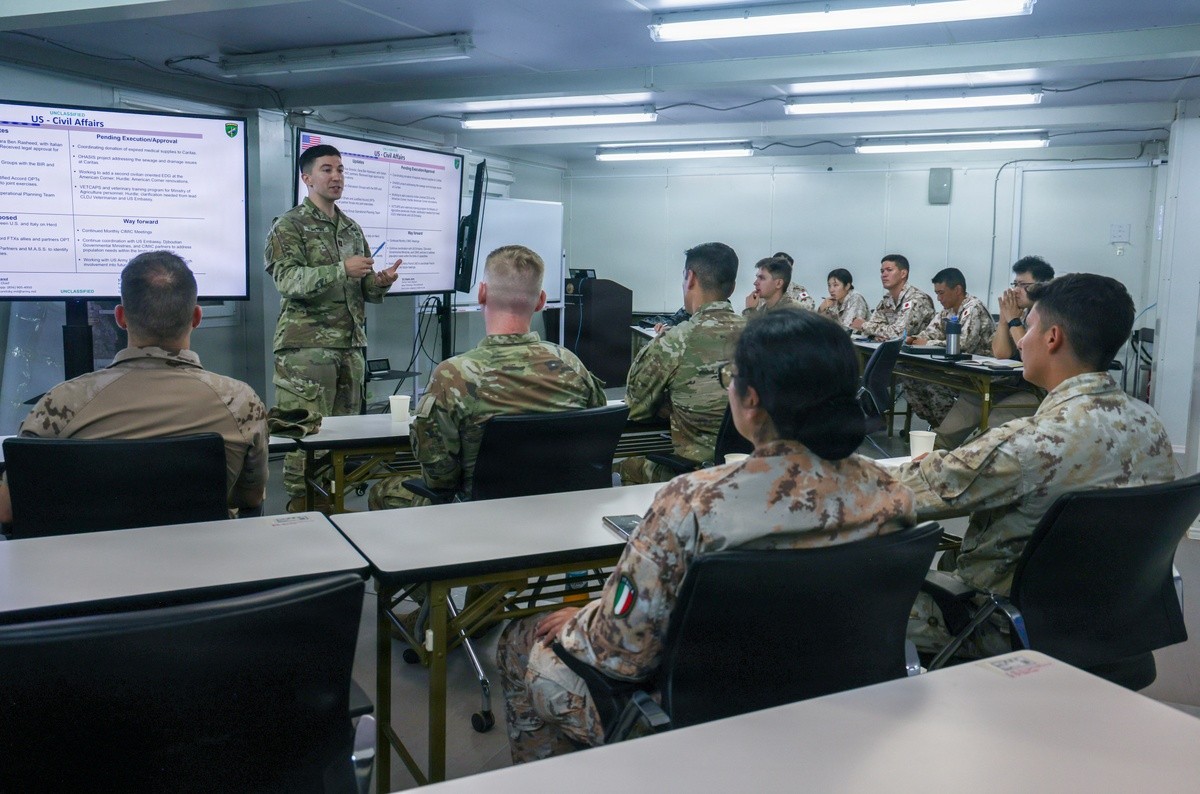
U.S. Soldiers assigned to Civil Affairs Battalion, U.S. Army Southern European Task Force, Africa (SETAF-AF) meet with partner forces to coordinate civil-military cooperation at the Japan Self-Defense Forces Base, Djibouti, July 2, 2026. The meeting gathered partner forces from the United States, Japan, Spain and Italy to enhance interoperability in the region by improving coordination efforts that foster peace and prosperity for local communities. (U.S. Army photo by Pfc. Luis Gautier-Martinez) (Photo Credit: Pfc. Luis Gautier-Martinez)VIEW ORIGINAL
VICENZA, Italy – New personnel recently took charge of the mission for Civil Affairs Battalion, U.S. Army Southern European Task Force, Africa (SETAF-AF) in Africa and Italy.
The battalion’s relief in place was an incremental process that began in late June and concluded July 6 at Caserma Del Din in Italy, Camp Lemmonier in Djibouti, and various locations throughout Africa.
The Soldiers who now comprise the two CA companies are Army reservists of the 412th Civil Affairs Battalion, based in Columbus, Ohio, and the 422nd Civil Affairs Battalion, headquartered in McLeansville, North Carolina.
According to U.S. Army Maj. Bryan Bridges, the CA battalion’s tactical officer in charge who serves in Italy, the battalion provides command and control for two civil affairs companies and a security force assistance brigade team in U.S. Africa Command’s area of responsibility.
“The CA teams support AFRICOM in building partner capacity, advancing U.S. access and influence, integrating civil knowledge and supporting crisis response,” Bridges said.
As the new civil affairs crew began their nine-month deployment, they learned the normal duties and expectations from their predecessors through the Army’s traditional “left seat/right seat” familiarization. Bridges emphasized that this phase is especially important because the lessons learned by new personnel provide continuity for the mission, while avoiding gaps in command and control to help maintain that mission.
Bridges said his team in Italy will ensure that units in Africa have all the information they need to complete mission requirements, while also providing SETAF-AF necessary information from CA units in the field.
U.S. Army Lt. Col. Kevin Jusza, outgoing battalion commander, explained that the CA mission is important to building baseline organizational trust with host nations, fostering and understanding local network access, and supporting partner forces’ training by incorporating the CA skill sets into their organizations. While the nature of civil affairs work is nonlethal, by making these connections and advancing relationships, CA operations contribute “through several lenses” to the Army’s overall, big-picture lethality and mission success.
“We work to ease and mitigate any tensions between U.S. forces and the local populace while developing mutual understanding and trust,” Jusza said.“ We also develop the civil common operating picture, creating a layout of the civilian area for U.S. commanders to better understand the environment.”
U.S. Army Sgt. 1st Class Corey Damron, the incoming noncommissioned officer in charge of the operations (S3) section, said that his unit’s initial priorities will concentrate on ensuring that all staff functions and processes run efficiently, with a focus on mission analysis to expand capabilities and mission opportunities.
“Our [future] goals are to complete missions aligned with U.S. Africa Command and SETAF-AF lines of effort to increase American sentiment within Africa while maintaining operations,” Damron said.
During their deployment, the outgoing CA Soldiers achieved significant accomplishments, such as conducting a subject matter expert exchange in Libya and supporting contingency operations in Nigeria. Jusza noted that both were first-time engagements in those locations for an Army Reserve civil affairs organization.
As he prepared to head home, Jusza counseled flexibility and patience for CA Soldiers taking charge of the mission in Africa.
“The mission is always changing and evolving,” Jusza said. “Don’t get stuck on any preconceived notions you developed during mobilization.”
U.S. Army Southern European Task Force, Africa (SETAF-AF) prepares Army forces, executes crisis response, enables strategic competition and strengthens partners to achieve U.S. Army Europe and Africa and U.S. Africa Command campaign objectives.