SETAF-AF’s civil affairs battalion conducts relief in place in Africa, Italy

Source: United States Army

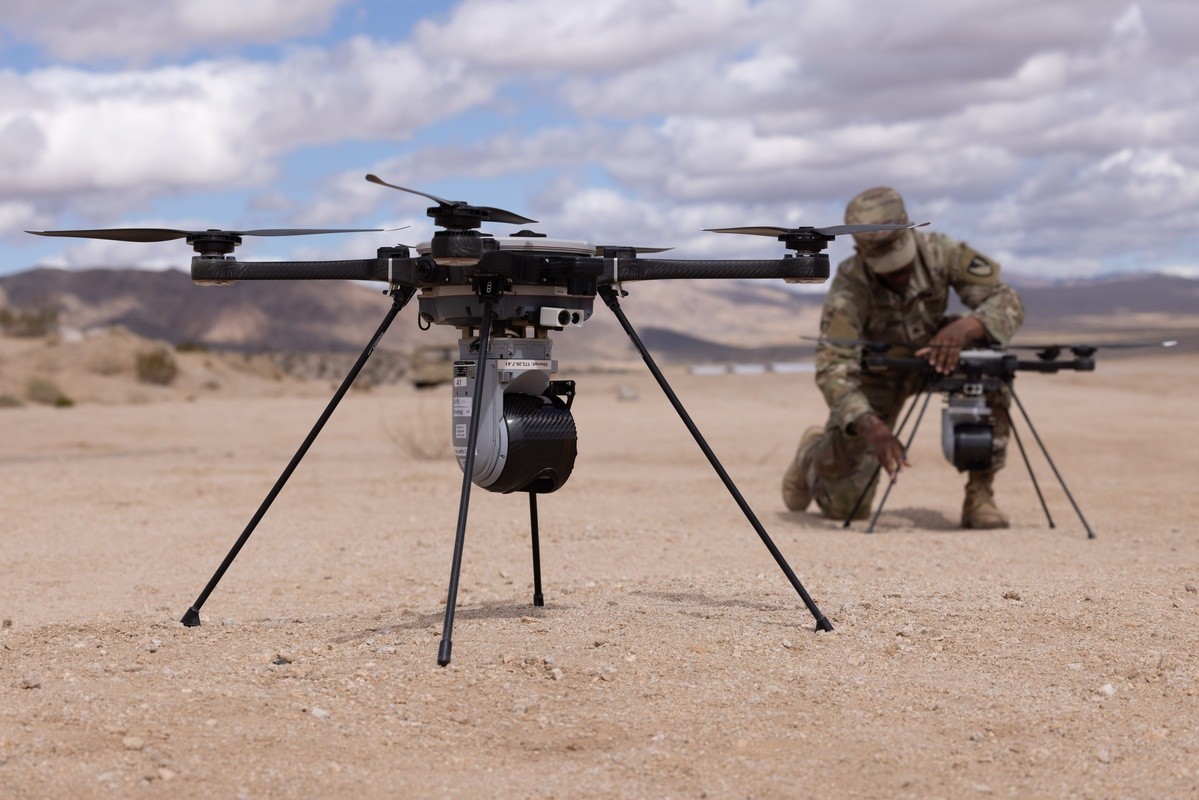
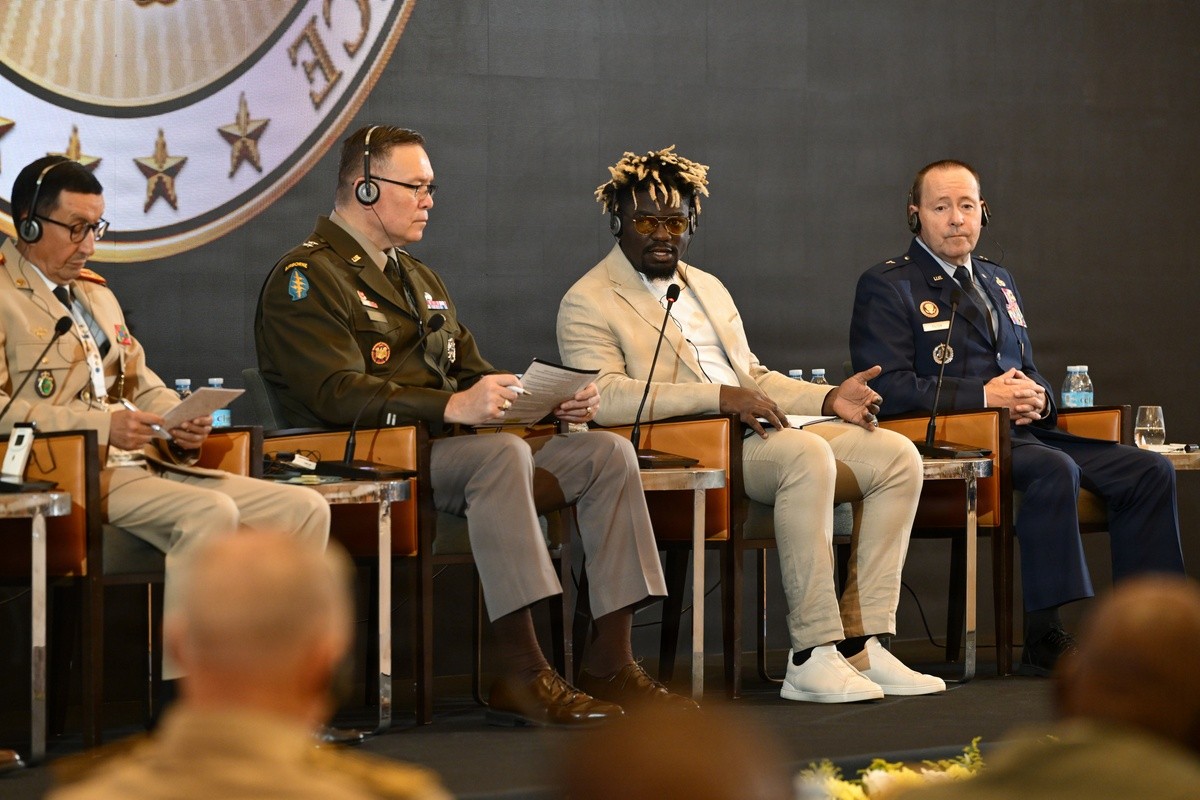
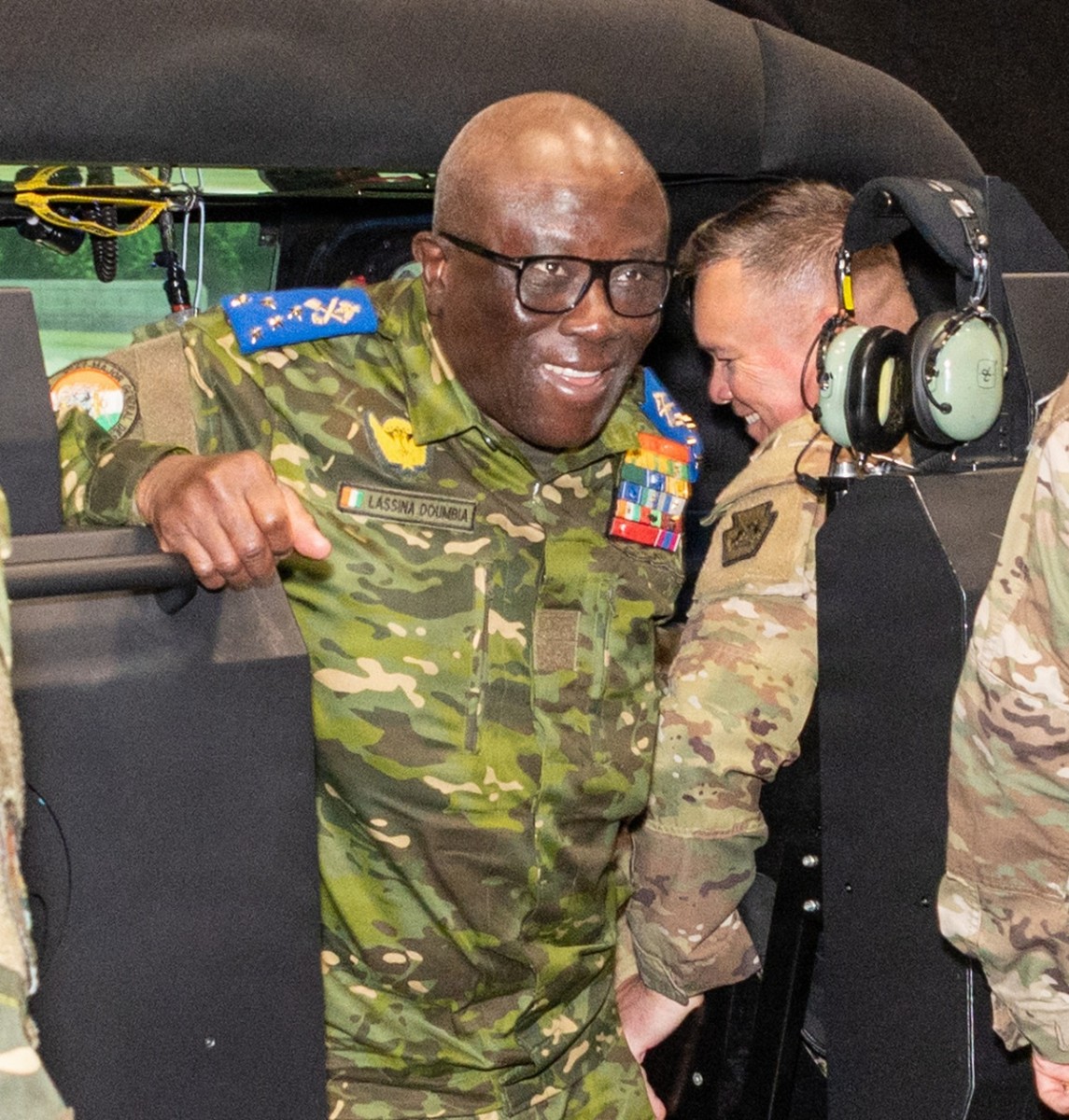
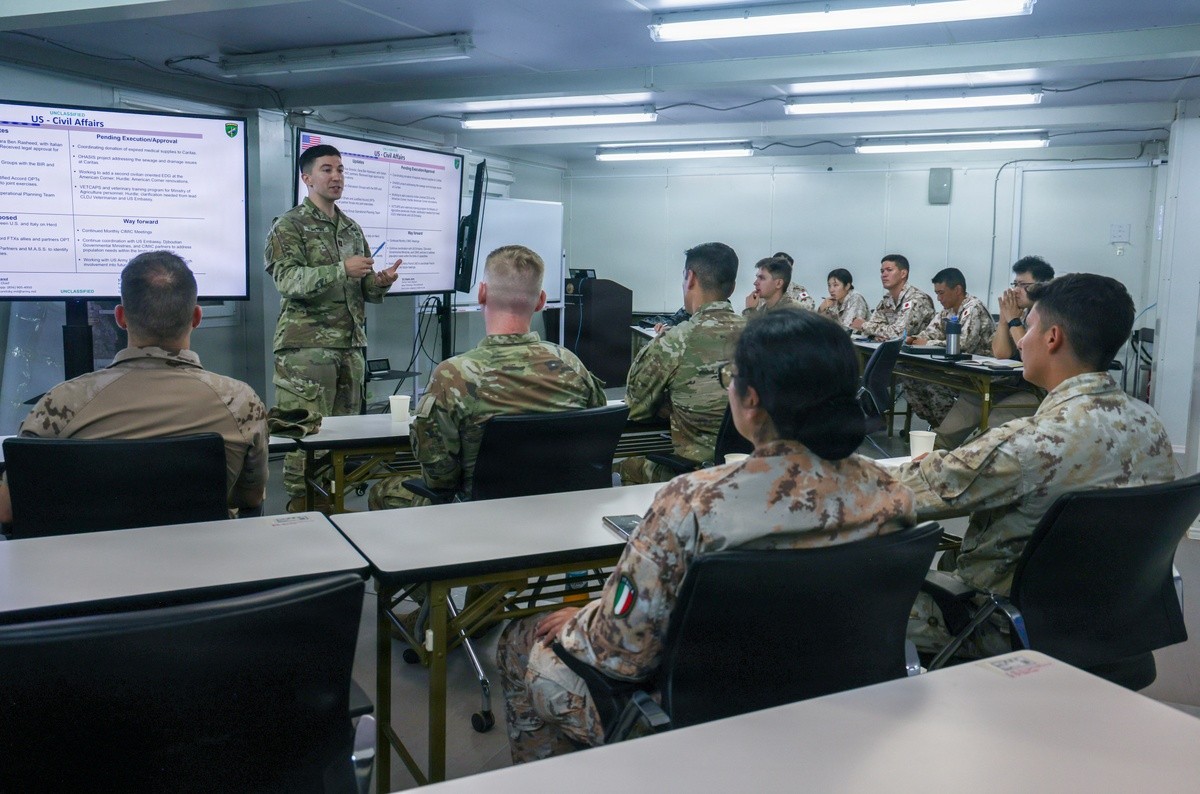
U.S. Soldiers assigned to Civil Affairs Battalion, U.S. Army Southern European Task Force, Africa (SETAF-AF) meet with partner forces to coordinate civil-military cooperation at the Japan Self-Defense Forces Base, Djibouti, July 2, 2026. The meeting gathered partner forces from the United States, Japan, Spain and Italy to enhance interoperability in the region by improving coordination efforts that foster peace and prosperity for local communities. (U.S. Army photo by Pfc. Luis Gautier-Martinez) (Photo Credit: Pfc. Luis Gautier-Martinez) VIEW ORIGINAL

Back to 

U.S. Army Southern European Task Force, Africa

VICENZA, Italy – New personnel recently took charge of the mission for Civil Affairs Battalion, U.S. Army Southern European Task Force, Africa (SETAF-AF) in Africa and Italy.

The battalion’s relief in place was an incremental process that began in late June and concluded July 6 at Caserma Del Din in Italy, Camp Lemmonier in Djibouti, and various locations throughout Africa.

The Soldiers who now comprise the two CA companies are Army reservists of the 412th Civil Affairs Battalion, based in Columbus, Ohio, and the 422nd Civil Affairs Battalion, headquartered in McLeansville, North Carolina.

According to U.S. Army Maj. Bryan Bridges, the CA battalion’s tactical officer in charge who serves in Italy, the battalion provides command and control for two civil affairs companies and a security force assistance brigade team in U.S. Africa Command’s area of responsibility.

“The CA teams support AFRICOM in building partner capacity, advancing U.S. access and influence, integrating civil knowledge and supporting crisis response,” Bridges said.

As the new civil affairs crew began their nine-month deployment, they learned the normal duties and expectations from their predecessors through the Army’s traditional “left seat/right seat” familiarization. Bridges emphasized that this phase is especially important because the lessons learned by new personnel provide continuity for the mission, while avoiding gaps in command and control to help maintain that mission.

Bridges said his team in Italy will ensure that units in Africa have all the information they need to complete mission requirements, while also providing SETAF-AF necessary information from CA units in the field.

U.S. Army Lt. Col. Kevin Jusza, outgoing battalion commander, explained that the CA mission is important to building baseline organizational trust with host nations, fostering and understanding local network access, and supporting partner forces’ training by incorporating the CA skill sets into their organizations. While the nature of civil affairs work is nonlethal, by making these connections and advancing relationships, CA operations contribute “through several lenses” to the Army’s overall, big-picture lethality and mission success.

“We work to ease and mitigate any tensions between U.S. forces and the local populace while developing mutual understanding and trust,” Jusza said.“ We also develop the civil common operating picture, creating a layout of the civilian area for U.S. commanders to better understand the environment.”

U.S. Army Sgt. 1st Class Corey Damron, the incoming noncommissioned officer in charge of the operations (S3) section, said that his unit’s initial priorities will concentrate on ensuring that all staff functions and processes run efficiently, with a focus on mission analysis to expand capabilities and mission opportunities.

“Our [future] goals are to complete missions aligned with U.S. Africa Command and SETAF-AF lines of effort to increase American sentiment within Africa while maintaining operations,” Damron said.

During their deployment, the outgoing CA Soldiers achieved significant accomplishments, such as conducting a subject matter expert exchange in Libya and supporting contingency operations in Nigeria. Jusza noted that both were first-time engagements in those locations for an Army Reserve civil affairs organization.

As he prepared to head home, Jusza counseled flexibility and patience for CA Soldiers taking charge of the mission in Africa.

“The mission is always changing and evolving,” Jusza said. “Don’t get stuck on any preconceived notions you developed during mobilization.”

Related Stories

New team assumes mission for SETAF-AF civil affairs battalion | Nov. 17, 2025

Army Reserve civil affairs Soldiers deploy to Africa, strengthen partnerships | Dec. 4, 2023

About SETAF-AF

U.S. Army Southern European Task Force, Africa (SETAF-AF) prepares Army forces, executes crisis response, enables strategic competition and strengthens partners to achieve U.S. Army Europe and Africa and U.S. Africa Command campaign objectives.

Follow SETAF-AF on: FacebookTwitterInstagramYouTubeLinkedIn & DVIDS

116th Mobile Brigade Combat Team, Virginia Army National Guard Media Roundtable Transcript

Source: United States Army

Date: July 24, 2026

Time: 3:30pm EST

Moderator: Lt. Col. Vonnie Wright

Panel Members:

Col. Arthur Moore, Brigade Commander, 116th MBCT

Command Sgt. Maj. Benzie Timberlake, Command Sergeant Major, 116th MBCT

Lt. Col. Jonathan Cochran, Battalion Commander, 1st Battalion, 116th Infantry Regiment

Lt. Col. Michael Moynahan, Battalion Commander, 1st Battalion, 149th Infantry Regiment

Major Jason Simulcik, Personnel Officer, 116th MBCT

Captain Patrick Crute, Lead Planner, 116th MBCT

First Lieutenant (P) Adam Mayers, Assistant Operations Officer, 116th MBCT

Reporters’ Present:

Carley Welch, Breaking Defense

Gina Cavallaro, Association of the United States Army (AUSA)

John Goheen, National Guard Association of the United States (NGAUS)

Lisbeth Perez, MeriTalk

Michael Metz, National Guard Bureau

Jon Harper, Defense Scoop

COL Arthur Moore: I’m Colonel Arthur Moore, commanding officer of the 116th Mobile Brigade Combat Team. At approximately 3400 soldiers, we are the largest major subordinate command in the Virginia Army National Guard. We’re headquartered in Staunton, Virginia. We have three infantry battalions based in Lynchburg, Virginia, Winchester, Virginia, and Barbourville, Kentucky; a support battalion based in Danville, Virginia; a multi-functional reconnaissance company based in Portsmouth, Virginia; a military intelligence company based in Manassas, Virginia; and a signal company based in Fredericksburg, Virginia. Additionally, we control a combat engineer company infantry headquartered in Fredericksburg, Virginia, and aligned with us for training is a fires battalion headquartered in Norfolk, Virginia.

Before we get started, I just wanted to offer our condolences to our teammates who have made the ultimate sacrifice in the CENTCOM area of operations. Our prayers in the brigade go out to their families and to their units.

So, as mentioned before, we’re here in our nation’s capital to participate in the Army Current Operations Engagement Tour. And we’ve been talking about how we’re building readiness in the National Guard while modernizing. Over the last 18 months, the 116th Normandy Brigade modernized from an Infantry Brigade Combat Team to a Mobile Brigade Combat Team. We were the first of two National Guard brigades to do this. The National Guard plans to transition 25 of its 27 ground combat brigades to Mobile Brigade Combat Teams. That’s approximately half of the Army’s maneuver forces—a massive modernization effort that’s urgent as the Army shifts to a leaner, more lethal, and agile force ready to support the joint force in large-scale combat operations.

By the end of our transition, the brigade will have completed 35 fieldings, including infantry squad vehicles, unmanned aerial systems, counter-unmanned aerial systems, electromagnetic warfare capabilities, and more modern command and control systems to operate in 21st-century warfare. At the same time, we executed domestic operations, trained with foreign partners, completed an Exportable Combat Training Capability rotation at Fort Pickett, Virginia, in June of 2025, and a Combat Training Center rotation at the Joint Readiness Training Center at Fort Polk, Louisiana, in June. We’ve innovated, built readiness, and increased our lethality. Now, in our ready year, we’re ready for any future state or federal mission if called upon.

Today, I’ve brought with me eight teammates here in the room with me: Command Sergeant Major Benzie Timberlake; two infantry battalion commanders, Lieutenant Colonel Jonathan Cochran and Lieutenant Colonel Michael Moynahan, from Virginia and Kentucky respectively; Major Jason Simulcik, our brigade personnel officer; Sergeant Major Donald Spring, our brigade operations sergeant major; Captain Patrick Crute, our brigade lead planner; First Lieutenant (P) Adam Mayers, our brigade assistant operations officer; and Chief Warrant Officer 2 Gisselotte Ventura, our brigade property book officer.

We’re here today prepared to talk to you about what we’ve done to build readiness through our personnel and property transitions, our experimentation, our modernization with global allies, and lastly, how we leverage the Guard’s advantage—our citizen-soldiers with civilian expertise and professional networks—to innovate and modernize.

A few items to highlight: In April, the 116th conducted a multi-domain operations live-fire exercise at Fort Pickett, Virginia. Here, the brigade worked with Army Research Laboratories and industry partners to conduct localized offensive cyber operations to trigger live electromagnetic attack, reconnaissance, maneuver, and counter-unmanned aerial system engagements. And in June, at the Joint Readiness Training Center rotation, the 116th Mobile Brigade Combat Team, along with National Guard units from 18 states and territories, three reserve component units, and foreign partners, stress-tested our formation against a world-class opposing force, experiencing the harsh realities of large-scale combat operations while refining our targeting processes and employing new fielded capabilities. And the 116th leveraged our partnership, including during our JAVELIN rotation, where the Finnish Army completed its first mortar live-fire exercise in the United States at Fort Polk, Louisiana.

So, with that introduction, we’re excited about this opportunity and this question-and-answer period, and we look forward to your questions.

LTC Vonnie Wright: All right, thank you, sir. Um, I will now begin with the first question. Carley Welch from Breaking Defense, do you have a question, ma’am?

Carley Welch (Breaking Defense): Yes, thank you. Um, I am curious what kind of technologies—you know, you mentioned ISVs, and you mentioned drones and counter-drones—is there any particular system that, you know, stood out the most to you and really you felt was enabling you to be kind of the most lethal? And then as a follow-up, you know, were there some things that weren’t working exactly well or could use some more work?

COL Arthur Moore: Well, certainly the infantry squad vehicles expand the battlefield and allow us to cover more objectives faster, catch the enemy off guard, and provide that mobile advantage. The unmanned aerial systems—short, medium, and long-range—certainly give us an advantage in our reconnaissance efforts and our ability to synchronize our kill chain. We’ve also received equipment for counter-unmanned aerial systems, and those systems, you know, we’re still testing and developing. And then, of course, the advanced command and control systems that are so important for us to communicate on a 21st-century battlefield.

LTC Vonnie Wright: Carley, did you have a follow-up, or was that part of your follow-up that you asked?

Carley Welch (Breaking Defense): Yeah, that was part of it. Thank you.

COL Arthur Moore: Absolutely.

LTC Vonnie Wright: Gina from AUSA, did you have a question for the team, ma’am?

Gina Cavallaro (AUSA): Yes, um, thank you for providing this opportunity. Um, there is so much going on in the brigade. Um, I think I’d like to know something about how it’s affecting the soldiers. I know there are some MOS’s that are either coming in or going away, or units that are being deactivated and others that are maybe taking in some of those soldiers. Can you talk about the personnel, how becoming a Mobile Brigade Combat Team has been for the soldiers? And please identify yourself when you answer. Thank you.

MAJ Jason Simulcik: Good afternoon, ma’am. Major Jason Simulcik, brigade S1. First and foremost, proactive personnel management led to increased retention as a matter of messaging early on that the transformation to a Mobile Brigade Combat Team did not mean that soldiers were losing their relevance to the formation, and that they would have a future home in the Virginia National Guard and the Army at large. So, the biggest change was a lot of our 19 Delta soldiers were transitioned over to 11 Bravo, which was supported by enterprise policy that allowed for a smooth transition through the Maneuver Center of Excellence that minimized the training required for that transition and allowed the soldiers to integrate seamlessly into either our infantry battalions or into our newly constructed multi-function reconnaissance company. Likewise, our brigade engineer battalion is being deactivated. However, 12-series opportunities still exist in the Virginia Army National Guard, so we were able to do one of two things with those soldiers, and that was to either integrate them into the newly created combat engineer company infantry or to realign them with other engineer formations across the Virginia National Guard.

Gina Cavallaro (AUSA): Okay, thank you. And as a follow-up, um, you mentioned the multi-functional reconnaissance company. Could someone on the team describe how that company came together and what their function is? How do they operate, and what are their capabilities? Thank you.

LTC Jonathan Cochran: Lieutenant Colonel Jonathan Cochran, I’m the 1st Battalion Commander. The multi-functional reconnaissance company falls under me. So, that company, we took the best of our cavalry squadron and put those personnel in this company. And right now, it has four platoons: it has a kind of traditional infantry scout platoon, an effects or weapons platoon that has small UASs along with some other specialized equipment, an electronic warfare platoon, and then a UAS platoon that will have short, medium, and long-range UASs. And, you know, we task-organize them for the mission. But their primary purpose is to answer battlefield requirements for the brigade commander. And then we’ve task-organized them into hunter-killer elements so that they can find, fix, and finish enemy in the brigade’s deep area, or in the area that’s past what the normal front line is.

LTC Vonnie Wright: Thank you, Gina. Just going to move on to John Goheen from the National Guard Association. Do you have a question, sir?

John Goheen (NGAUS): I do. I look at the makeup of a Mobile Brigade Combat Team, and Colonel Moore, I’m curious, when you went through the exportable exercise to get ready for this particular rotation, you had a very different unit with very different equipment. How much of a challenge was it in a short period of time to get ready, and is this new unit ready for the challenges of JRTC?

COL Arthur Moore: Yes, good question. It is a challenge to make this transition in 18 months. It just required a lot of time and effort from our soldiers, their families, their employers, their communities, our state staff, and really the National Guard Bureau supporting us with extra funding and extra resources. So, while it was a challenge, the soldiers were excited to be on the cutting edge of modernization and really stepped up to the challenge. And we’re proud of them and for all the support that got us through this transition.

LTC Vonnie Wright: And John, did you have a follow-up?

John Goheen (NGAUS): I do have a follow-up. I know JRTC is a place to make mistakes and learn from them, but I would imagine, Colonel, it gave you an opportunity to see the potential of the Mobile Brigade Combat Team. What is the potential of this particular unit on the battlefield of the future?

COL Arthur Moore: Yeah, the experience at the Joint Readiness Training Center really highlighted the potential as we recentralize more capabilities at the division level and allow our brigade combat teams to focus on the tactical fight with the right capabilities, like we mentioned before: the expanded battlefield, the ISR capabilities, more lethal capabilities, electronic warfare, unmanned aerial systems, advanced command and control. I think the potential is there, and especially if we can get the rest of the 25 of 27 National Guard brigades modernized, then we’ll be right there ready to contribute alongside our active component counterparts in the joint fight in large-scale combat operations.

LTC Vonnie Wright: Thank you, John. Lisbeth from MeriTalk, did you have a question for the team, ma’am?

Lisbeth Perez (MeriTalk): Yes, hi. Thank you for putting this together. Um, I know you all touched a little bit on one of the challenges you had. Could you talk a little bit more about lessons learned or other challenges you had along the way?

LTC Vonnie Wright: Could you repeat that, ma’am? I’m sorry about that.

Lisbeth Perez (MeriTalk): Oh, I was just trying to get a little bit of insight on maybe some other challenges you guys had along the way.

COL Arthur Moore: I mean, anytime that you’re deactivating units, activating new units, re-stationing units, and soldiers moving to new formations as older formations become less relevant and newer formations take on more relevance, you know, there’s going to be some challenges with that. And we’ve had to just exercise the change management, put soldiers first, giving them the opportunities, and make sure that they know that the Army still has opportunities for them. You know, no soldier is losing their job through this modernization. Everyone has opportunities to continue to serve and contribute to the joint force.

LTC Vonnie Wright: Hi Lisbeth, did you have a follow-up to that, ma’am?

Lisbeth Perez (MeriTalk): No, no follow-ups. Thank you.

LTC Vonnie Wright: Thank you. Michael Metz from the National Guard, do you have a question, sir?

Michael Metz (National Guard): No, sir. I’m just here to learn some more. Thank you.

LTC Vonnie Wright: All right. John Harper from Defense Scoop, did you have a question, sir?

Jon Harper (Defense Scoop): Uh, yes, thank you. Um, I was wondering if you could talk a more about the advanced C2 capabilities that you mentioned, maybe give some specific examples of what those are and kind of how you use those in the recent exercises.

COL Arthur Moore: Yeah, one of the things we’re trying to do is use new technology to improve our ability to improve our common operating picture and our common intelligence picture. And that’s getting digital systems to lower levels, down to platoons and companies, and just improve the way that different command posts communicate with each other, from the company command posts to the battalion command posts to the brigade, and then from the brigade to the division. And it’s all about improving situational awareness, improving and lowering the speed of the kill chain, being able to identify the enemy and get effects on target as quickly as possible.

LTC Vonnie Wright: All right, John, did you have a follow-up for that, sir?

Jon Harper (Defense Scoop): Uh, yes. Um, I was wondering, you know, you mentioned the UAS that you’ve been using, and I was wondering if those are all ISR drones or if, you know, some of them are kind of the one-way attack drones or, you know, lethal loitering munition type weapons.

COL Arthur Moore: Yeah, that’s a good question. All of the above. We’re fielding and experimenting with all of those.

Jon Harper (Defense Scoop): Are there sort of specific systems that you’re able to talk about, you know, the sort of brand or manufacturer or anything like that, just, you know, like the names of some of the systems, just for examples?

1LT (P) Adam Mayers: Yeah, hey, absolutely, sir. This is Lieutenant Adam Mayers, the brigade assistant operations officer. So, for short-range reconnaissance, we’re using a combination of two Teal platforms: the Teal Black Widow and the Teal 2. We use these down at the platoon level, including platoons in our sustainment formations as well, not just our maneuver formations. Then our multi-functional reconnaissance company employs Anduril Ghost Xs with the Lattice OS, as well as Performance Drone Works C100s. And then, of course, in an environment where we’re rapidly fielding equipment, trying to be faster than our pacing threats, some things aren’t going to make it in time. So, our long-range reconnaissance platform, we actually partnered with industry for a contractor-owned, contractor-operated service contract for a Redwire VXE-30 or Block 30 that we used at the Joint Readiness Training Center to provide brigade-level ISR and answer really important information requirements for the brigade commander. And then Switchblades—we’re using the AeroVironment Switchblade. We’ve had an opportunity to live-fire four of those rounds and really work with loitering munitions and understand what the limitations and capabilities there are. And then we’re looking forward to first-person view drone fieldings from a lot of different funding sources and programs in the Army. And we just stood up a 3D printing lab at Fort Pickett, Virginia, to fabricate our own FPV drones.

Jon Harper (Defense Scoop): Great, thank you.

LTC Vonnie Wright: All right, um, before I go back around and see if there are any follow-ups, I just wanted to mention that while this unit was modernizing, at the same time they still had national and federal missions to take care of. They were also citizen-soldiers, so there is also a special citizen-soldier effect that only they know and they have because they do work with different industries and they have some technical expertise. So, if anyone around the room wanted to magnify and give the reporters just a little bit of a lens on what makes your citizen-soldiers a little bit more special and how that gave you a modernization advantage against some of us active soldier guys, is there anyone that could speak to that a little bit about the special expertise of the civilian workers you have and how they were able to effectively modernize and how it was a little bit different?

1LT (P) Adam Mayers: Yeah, hey, this is Lieutenant Adam Mayers again. I’d love to start this one and then hand it off to some of the battalion commanders and NCOs in the room with us here. In April, Colonel Moore mentioned that we did a multi-domain operations live-fire exercise. That multi-domain word gets thrown around a lot in modernization, but we were the first Guard unit to actually be able to use some civilian expertise in both intelligence collection and information technology. So, as an example, we had a soldier at our multi-domain live-fire with our MFRC, but on the brigade staff, who was able to leverage his experience as a penetration tester from Microsoft. And what he was able to do was localized offensive cyber operations on what we had designed as an enemy network. And what he did was he used some Linux tools to capture the password of that network, log on to that network, and start shutting off ATAK devices we had put on that network kind of playing bad guy. And what that does is it herded the communications from digital to voice, where our soldiers with some of that intelligence collection and IP background in the MFRC were then able to use our new electromagnetic warfare systems—our Terrestrial Layer System Manpack (TLS Manpack)—to engage in some pretty cool training that then enabled some reconnaissance and maneuver formations to use drones and actually conduct a live-fire exercise. And then throughout all of this, we were able to adjudicate or replicate some joint and division effects using a soldier we’ve got that works for the National Geospatial-Intelligence Agency, kind of giving our MFRC and our brigade staff a sense of multi-domain operations where there are a lot of contiguous and non-contiguous fights happening everywhere from space down to land, sea, air, understanding we might not always have an opportunity to exploit gains or conduct maneuver, but here are the conditions in which we would be able to when joint effects are happening, when cyber effects are happening. And the Army’s got a lot of great programs going on for that, but it was our unique civilian experience that enabled us to figure that out, and thankfully we figured that out before we went to the Joint Readiness Training Center. That’s all I’ve got. Anybody in the room, any leaders have any examples?

MAJ Jason Simulcik: I’ll just piggyback on that a little bit. Again, Major Simulcik, brigade S1. What we’re really talking about here is the concept of the Guard’s advantage. The National Guard is enhancing Army innovation and modernization by leveraging the unique civilian technical expertise, professional networks, and diverse backgrounds of its dual-status soldiers. What this does is that the civilian careers in technology, intelligence, logistics, emergency management, and industry help bridge commercial innovation into military capability.

LTC Vonnie Wright: All right, thank you for that. Carley, did you have another question that you might want to ask?

Carley Welch (Breaking Defense): Yeah, just following up on the specific systems that were used. You all talked about, you know, the Black Widow, the Ghost X, the AV Switchblade. Was there anything that, you know, you all tried for the first time that you specifically thought, ‘Oh, this is a great system, like we could really use this,’ and then on the flip side, something that perhaps you didn’t see as useful?

LTC Michael Moynahan: This is Lieutenant Colonel Michael Moynahan with the 1-149th. So, speaking specifically for the Teal model Black Widow, my battalion was fielded 19 of those systems previous to the Joint Readiness Training exercise. Got to use those. It really gave us an enhanced capability we did not have, specifically with reconnaissance. So, putting the sensors out in front of our formations, allowing us to see what the enemy threat would be 3 and 4 kilometers in front of the front line of troops. That was something that we had not really been able to do prior to the Joint Readiness Training exercise. In addition, the capability of being able to call for fire—so fire our mortar systems—using that UAS to lase targets and then call for fire with our battalion mortars and, in some cases, our company mortar systems, really, again, another increased asset that we did not have prior to transformation. And so that was a big win for us down at JRTC.

LTC Vonnie Wright: Carley, did you have a follow-up to that?

Carley Welch (Breaking Defense): Yeah, just a quick one, and I don’t know if you all can speak to this, but, you know, given that the 116th was the first MBCT to, you know, take part in transformation in contact, I’m just kind of curious why the 116th was the first. You know, is there any kind of outstanding qualities that the greater Army saw that, you know, really wanted to outfit this team out of all of them?

CSM Benzie Timberlake: So, I’ll start this one off. I’m Command Sergeant Major Benzie Timberlake. And first and foremost, I believe we were chosen for this because we are the best brigade in the United States Army National Guard. Anyone else wants to follow up on there?

COL Arthur Moore: No, I think that, you know, selecting units for modernization and the timelines, we’re balancing timing, real-world missions, and our brigade was postured well with an XCTC rotation followed by a JRTC rotation the following summer that really allows us to field the equipment and test it in those environments, and then really put us in a position where we can translate those lessons learned to the brigades that will follow us so that the brigades modernizing behind us can learn our lessons and build on our lessons learned and have a smoother process.

Carley Welch (Breaking Defense): Okay, thank you.

LTC Vonnie Wright: Gina from AUSA, did you have another question you wanted to ask based off of the dialogue, ma’am?

Gina Cavallaro (AUSA): Yes, um, thank you. A couple of things. Maybe Colonel Moore and whoever else on the team. How, over the 18 months when you were building up your capabilities as a mobile team, how often did you consult with or work with commanders of other brigades in the active duty component that had also made that transition? And my follow-up is, could you tell me what’s next for your brigade? How are you going to remain ready, and when do you have your next collective training event? Thank you.

LTC Michael Moynahan: This is Lieutenant Colonel Michael Moynahan. So, speaking specifically for the battalion in Kentucky, we’ve got habitual relationships with the 101st Airborne Division there in Kentucky at Fort Campbell. And so, as soon as we knew we were going to be going through the transformation process, we knew we had a second brigade from the 101st that was also had been through transformation. So, we made contact with them, started to share lessons learned, you know, things that were working for them that we could apply as we began to receive equipment and go through some of the transformation initiatives. So, that was a good source of information, and they’re right there close to us in state.

LTC Jonathan Cochran: And this is Lieutenant Colonel Jonathan Cochran. Um, so the Joint Readiness Training Center, it’s not a surprise test. We don’t just arrive there and don’t know what we’re about to see. The team there did a really good job in prepping us for the fight that we were at. So, they sent us lessons learned, they sent us techniques and procedures from the former brigades on how they configured their ISVs, how they loaded their soldiers and their equipment on it, so that we were kind of starting, you know, one foot forward as soon as we got to Fort Polk.

COL Arthur Moore: And then I’ll just close that with, yeah, at the brigade level, we all brigade commanders work together through this modernization. You know, I worked closely with Dave Womack, 25th Infantry Division, Josh Kozlov, 10th Mountain Division, to learn the lessons that they learned and get different equipment that they were purchasing and experimenting with and how that might enhance our journey.

Gina Cavallaro (AUSA): Okay, and Colonel Moore, what’s coming up for the brigade in the coming year? Thank you.

COL Arthur Moore: Yeah, we just completed our high state of readiness coming out of the Joint Readiness Training Center. We’re ready for any federal or state mission that the Army might ask of us. And then it’s just refining all those lessons learned from the Joint Readiness Training Center with regard to improving our performance and our capabilities across all of the warfighting functions: maneuver, intelligence, command and control, fires, sustainment, protection. We’ll have, you know, continued drill weekends and annual trainings that test and train those capabilities. And then we still have some additional fieldings as well, as mentioned: the long-range reconnaissance drone that we did a contractor-owned, contractor-operated effort there at the Joint Readiness Training Center. We’ll get those long-range reconnaissance drones fielded this month, as well as more advanced command and control systems, and then continuing to conduct live-fire exercises at Fort Pickett and take advantage of opportunities to train with our foreign partners in both Virginia and Kentucky.

Gina Cavallaro (AUSA): Great, thank you very much.

LTC Vonnie Wright: John Goheen from the National Guard Association, did you have another question, sir?

John Goheen (NGAUS): I do, and this is for the battalion commanders. I know you had the ISVs for a few months now. What surprised you about the troops’ use of the ISVs? What did you learn about the ISV as your source of mobility in the fight?

LTC Jonathan Cochran: Lieutenant Colonel Jonathan Cochran here. So, we were actually really surprised on how quickly the soldiers took to them. Everyone says it’s the frame of a Chevy Colorado, and that’s truly it. And these are some extremely capable trucks because they have a lot of power and they’re light. So, we’re able to take them places that we could have never imagined taking a Humvee. They definitely increased our mobility significantly. What used to take an entire day to move my battalion, I can now do in 2 to 3 hours, and my soldiers arrive ready to fight. It greatly increased our operational flexibility across the battlefield.

LTC Michael Moynahan: Yeah, this is Colonel Moynahan. I would just add to that, certainly it increased operational reach. Soldiers are taking to them really well. They understand what this vehicle is supposed to be. And so, what we’ve kind of learned is it can carry a lot of sustainment to the fight that we would not otherwise have. And so, another capability that we kind of learned throughout JRTC is it can be a non-standard CASEVAC vehicle. So, again, it gives you increased capability there for moving casualties back to your Role 1 and your Role 2 to increase survivability. So, it’s just a really simple vehicle to figure out how to drive, and it doesn’t get stuck very often, as we’ve tested down at the Joint Readiness Training Center.

John Goheen (NGAUS): As a follow-up, this is to both battalion commanders. I know at JRTC, as well as NTC, after every engagement there’s an AAR, and you get a chance to talk to the opposing force. What did they share with you that’s insightful that will help you in terms of your training plans for the future?

LTC Jonathan Cochran: I think what was significant for that was just our ability to see further than what our traditional scouts could see. So, this was less with the ISVs and more really using our different UAS systems. Traditionally, the scouts go out, and, you know, the OPFOR scouts are usually a little bit better than ours because they live there. But our UASs actually gave us a pretty decisive advantage, being able to project out 2 to 3 kilometers, find the enemy, and then call for fire, call for mortars on them, which really allowed us to keep momentum as we moved across the battlefield.

LTC Michael Moynahan: This is Colonel Moynahan. I would just add, I think it increased our ability to be flexible and move quicker. So, the, you know, one of the comments made is, you know, when you don’t have the ISV, you’re only moving as quick as your dismounted formation. So, the ISV gives you the ability to flex across the battlefield as you see the enemy situation develop and maneuver quicker to take advantage.

John Goheen (NGAUS): Thank you.

LTC Vonnie Wright: Lisbeth from MeriTalk, did you have another question, ma’am?

Lisbeth Perez (MeriTalk): No, no more questions. Thanks.

LTC Vonnie Wright: Thank you.

LTC Vonnie Wright: John Harper from Defense Scoop, did you have a question?

Jon Harper (Defense Scoop): Uh, yes. I was wondering if you could talk a little bit more about some of the specific counter-UAS systems that you’ve been using, and, you know, which ones you’ve found to be the most effective.

1LT (P) Adam Mayers: Hey, yes, sir. This is Lieutenant Adam Mayers again. So, specific systems that we were fielded and got some experience on at the Joint Readiness Training Center: the Smart Shooter SMASH, as well as the MyDefence Pitbull and Wingman—that’s a soldier-worn UAS detection and jamming system. And then down at JRTC, there are a number of training equipment sets that we can fall in on and use, and we did: Dronebusters, Stingers, and then we were even able to use our Mastodon TLS Manpacks—that’s the Terrestrial Layer System Manpack—to do some drone detection.

And I think where we’re really seeing a lot of success is in those electromagnetic warfare systems, where we know, and soldiers know, or a command post knows, that a drone is coming before they ever have to see or hear it. And that’s what’s really important for this protection bubble that we are trying to create as an MBCT to maneuver these very dismounted and survivable sensors and shooters across the battle space against a pacing threat, is knowing that something is coming before we ever have to see it, or hear it, or shoot it down kinetically. Just affecting its ability to fly at all, I think, is where we’re seeing the most success. That’s my perspective. We’ve got a number of NCOs and great leaders in the room who can speak to what their soldiers saw as well.

John Harper (Defense Scoop): John, did you have a follow-up to that?

Jon Harper (Defense Scoop): Which of those systems that you mentioned would you expect to be organic to your unit, you know, if you were deployed overseas? I know you kind of just, you know, recently experimented with those at that rotation, but I was wondering which systems, you know, you would kind of expect at this point, if you did get deployed overseas, to be able to take with you.

COL Arthur Moore: Yeah, I think it’s all mission-dependent. You know, different missions will require different capabilities, and certainly depending on, you know, where units are deployed, they may receive more equipment than what we tested.

 Jon Harper (Defense Scoop): Right, thank you.

LTC Vonnie Wright: All right, team. We’re just about running out of time. I was going to allow the brigade commander to close us out. Is there anything you want to impress upon the team here, sir, as a closing statement that you’d like to have, sir?

COL Arthur Moore: Yes, just thanks everybody for participating. We really appreciate you engaging with us and your interest in Army modernization and our experience here at the 116th. And so, it’s been a pleasure, and thank you for the thoughtful questions, and look forward to any follow-up that you might have.

LTC Vonnie Wright: All right, team. All the media on the line, appreciate you for coming. Thanks a lot. If, of course, you have any other follow-up questions or queries, please feel free to reach out to me or ACOO as a whole, and I look forward to hearing from you again soon. Thanks so much for coming. I appreciate it.
Soldiers compete for top honors in SETAF-AF competition

Source: United States Army

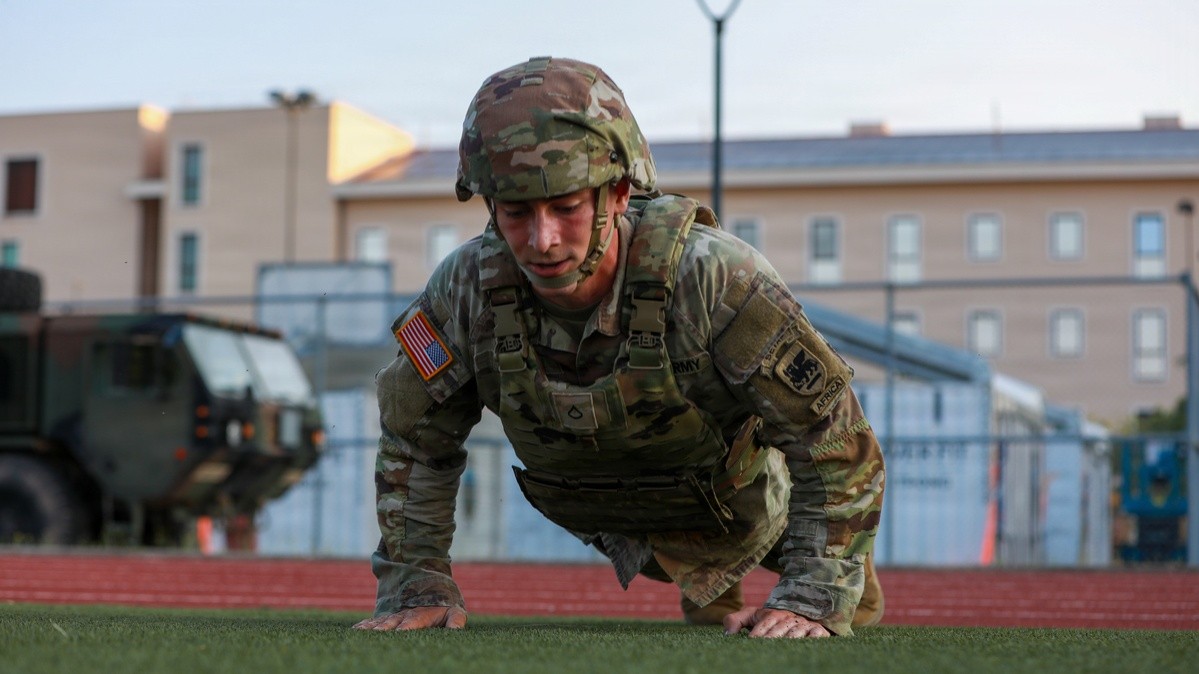
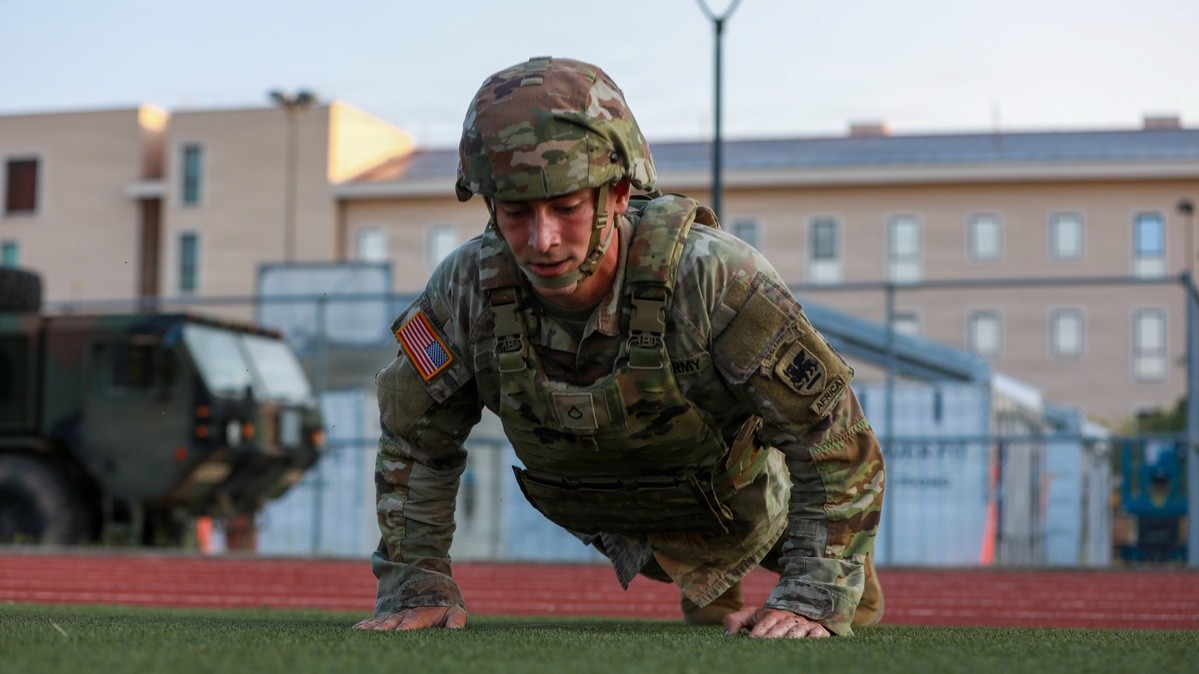
1 / 4 Show Caption + Hide Caption – U.S. Army Pfc. Logan Doll, a geospatial engineer with the 517th Geospatial Planning Cell, Intelligence and Sustainment Company, Headquarters and Headquarters Battalion, U.S. Army Southern European Task Force, Africa (SETAF-AF), completes push-ups during the SETAF-AF Noncommissioned Officer and Soldier of the Year Competition expert physical fitness assessment lane at Caserma Del Din, Vicenza, Italy, July 16, 2026. The event evaluated competitors across multiple warrior tasks and physical challenges to strengthen readiness, recognize excellence and determine the command’s top NCO and Soldier. (Photo Credit: U.S. Army photo by Staff Sgt. Raquel Birk) VIEW ORIGINAL
2 / 4 Show Caption + Hide Caption – U.S. Army Sgt. John DeLiso, a counterintelligence agent with 207th Military Intelligence Brigade, clears a M249 squad automatic weapon during the U.S. Army Southern European Task Force (SETAF-AF) Noncommissioned Officer and Soldier of the Year Competition weapons lane at Caserma Del Din, Vicenza, Italy, July 16, 2026. The event evaluated competitors across multiple warrior tasks and physical challenges to strengthen readiness, recognize excellence and determine the command’s top NCO and Soldier. (Photo Credit: U.S. Army photo by Staff Sgt. Raquel Birk) VIEW ORIGINAL
3 / 4 Show Caption + Hide Caption – U.S. Army Pfc. Zachary Pierce, a combat medic assigned to the 173rd Mobile Brigade Combat Team (Airborne), completes function check on a M249 squad automatic weapon during the U.S. Army Southern European Task Force (SETAF-AF) Noncommissioned Officer and Soldier of the Year Competition weapons lane at Caserma Del Din, Vicenza, Italy, July 16, 2026. The event evaluated competitors across multiple warrior tasks and physical challenges to strengthen readiness, recognize excellence and determine the command’s top NCO and Soldier. (Photo Credit: U.S. Army photo by Staff Sgt. Raquel Birk) VIEW ORIGINAL
4 / 4 Show Caption + Hide Caption – U.S. Army Pfc. Eron Hozanovic, a paralegal specialist assigned to the 509th Signal Battalion, 2nd Theater Signal Brigade, carries water jugs during the U.S. Army Southern European Task Force (SETAF-AF) Noncommissioned Officer and Soldier of the Year Competition expert physical fitness assessment lane at Caserma Del Din, Vicenza, Italy, July 16, 2026. The event evaluated competitors across multiple warrior tasks and physical challenges to strengthen readiness, recognize excellence and determine the command’s top NCO and Soldier. (Photo Credit: U.S. Army photo by Staff Sgt. Raquel Birk) VIEW ORIGINAL

Back to 

U.S. Army Southern European Task Force, Africa

VICENZA, Italy — Soldiers from U.S. Army Southern European Task Force, Africa (SETAF-AF), the 173rd Mobile Brigade Combat Team (Airborne), 207th Military Intelligence Brigade (Theater), and 509th Signal Battalion, 2d Theater Signal Brigade, competed for the titles of Noncommissioned Officer of the Year and Soldier of the Year during SETAF-AF’s annual competition at Caserma Del Din, July 16, 2026.

The competition brought together three NCOs and three junior enlisted Soldiers selected by their commands to demonstrate excellence in physical fitness, tactical proficiency, military knowledge and leadership. Throughout the event, competitors faced a series of rigorous evaluations designed to identify the command’s top performers while reinforcing the Army’s commitment to readiness and professional excellence.

“When I was a young Soldier, we just did the knowledge board, but there was no way to test your physical capabilities, your tactical capabilities and how you implemented those two into any kind of scenario,” said U.S. Army Command Sgt. Maj. Chad B. Harness, senior enlisted advisor, SETAF-AF. “The goal is that we actually test you and see where you stand as a Soldier or as a noncommissioned officer to determine whether or not we have the best person.”

1 / 2 Show Caption + Hide Caption – U.S. Army Command Sgt. Maj. Chad B. Harness, senior enlisted advisor and president of the board, U.S. Army Southern European Task Force, Africa (SETAF-AF), tests the doctrinal knowledge of competitors during the SETAF-AF Noncommissioned Officer and Soldier of the Year Competition at Caserma Del Din, Vicenza, Italy, July 16, 2026. The event evaluated competitors across multiple warrior tasks and physical challenges to strengthen readiness, recognize excellence and determine the command’s top NCO and Soldier. (Photo Credit: U.S. Army photo by Staff Sgt. Raquel Birk) VIEW ORIGINAL
2 / 2 Show Caption + Hide Caption – U.S. Army Pfc. Zachary Pierce, a combat medic assigned to the 173rd Mobile Brigade Combat Team (Airborne), completes a knowledge exam during the U.S. Army Southern European Task Force (SETAF-AF) Noncommissioned Officer and Soldier of the Year Competition at Caserma Del Din, Vicenza, Italy, July 16, 2026. The event evaluated competitors across multiple warrior tasks and physical challenges to strengthen readiness, recognize excellence and determine the command’s top NCO and Soldier. (Photo Credit: U.S. Army photo by Staff Sgt. Raquel Birk) VIEW ORIGINAL

The competition began with the Expert Physical Fitness Assessment, requiring competitors to complete a demanding sequence of events while wearing operational camouflage pattern uniforms, helmets, eye protection, gloves and plate carriers. The assessment included two one-mile runs separated by functional fitness tasks, including dead-stop pushups, a 100-meter sprint, sandbag lifts, a farmer carry, a high crawl and three-to-five-second rushes.

“The experiences that helped me the most are definitely the training I’ve received from when I was a junior enlisted Soldier on weapons systems and physical fitness and just being able to rely on those level-10 skills,” said U.S. Army Sgt. Nathan Newton, an infantryman assigned to the 173rd MBCT.

Following the physical assessment, competitors demonstrated their tactical proficiency during Expert Soldier Badge and Expert Infantryman Badge lanes. Graders evaluated each participant on weapons handling, including clearing, disassembling, assembling and conducting function checks on the M4 carbine, M249 squad automatic weapon and M17 pistol.

“This competition differs from my daily life because, as someone who works in geo-intelligence, I’m usually working with information systems and computers,” said U.S. Army Pfc. Logan Doll, a geospatial engineer with the 517th Geospatial Planning Cell, Intelligence and Sustainment Company, Headquarters and Headquarters Battalion, SETAF-AF. “Working with weapon systems, physical tests, writing essays and doing boards are all things that I don’t do in my daily job.”

The competition then shifted from physical performance to intellectual and leadership challenges. Competitors completed a 50-question written examination before writing an essay on contemporary Army leadership topics, including professional military education requirements and balancing garrison responsibilities with combat readiness.

“The toughest part of the competition was definitely the essay,” Newton said. “It was a lot to think through in a limited amount of time, but I relied on the knowledge I’d gained from my leaders and my own experiences to work through it.”

The final event placed competitors before a formal board of senior leaders while wearing the Army Green Service Uniform. Board members assessed military knowledge, communication skills, leadership philosophy and decision-making under pressure.

1 / 2 Show Caption + Hide Caption – U.S. Army Command Sgt. Maj. Chad B. Harness, senior enlisted advisor, U.S. Army Southern European Task Force, Africa (SETAF-AF), speaks to competitors and announces the winners during the SETAF-AF Noncommissioned Officer and Soldier of the Year Competition at Caserma Del Din, Vicenza, Italy, July 16, 2026. The event evaluated competitors across multiple warrior tasks and physical challenges to strengthen readiness, recognize excellence and determine the command’s top NCO and Soldier. (Photo Credit: U.S. Army photo by Staff Sgt. Raquel Birk) VIEW ORIGINAL
2 / 2 Show Caption + Hide Caption – U.S. Army Southern European Task Force, Africa (SETAF-AF) sergeants major, led by U.S. Army Command Sgt. Maj. Chad B. Harness, center, senior enlisted advisor and president of the board, SETAF-AF, test the doctrinal knowledge of Pfc. Logan Doll, a geospatial engineer with the 517th Geospatial Planning Cell, Intelligence and Sustainment Company, Headquarters and Headquarters Battalion, SETAF-AF, during the SETAF-AF Noncommissioned Officer and Soldier of the Year Competition at Caserma Del Din, Vicenza, Italy, July 16, 2026. The event evaluated competitors across multiple warrior tasks and physical challenges to strengthen readiness, recognize excellence and determine the command’s top NCO and Soldier. (Photo Credit: U.S. Army photo by Staff Sgt. Raquel Birk) VIEW ORIGINAL

“I’d say the board was the toughest part of the competition,” Doll said. “I’d never appeared before a board at that high of a level, and it was stressful, but studying with my NCOs and preparing beforehand helped me be ready.”

At the conclusion of the competition, Newton was named the command’s 2026 Noncommissioned Officer of the Year, while Doll earned the title of 2026 SETAF-AF Soldier of the Year.

“Being named SETAF-AF Soldier of the Year means a lot to me because everything I’d done leading up to this competition helped prepare me for it,” Doll said. “It was a test of my abilities, and earning this title showed me I could perform under pressure.”

Harness congratulated all six competitors, emphasizing that every Soldier who volunteered demonstrated the initiative and professionalism expected of Army leaders.

“I’m very proud of the units that were represented today, but we can only have one winner for each category,” Harness said. “For the NCOs, this should be the sharpening of your skills because that’s what we do, we sharpen each other. And for every competitor, simply having the courage to step forward and compete says a lot about your character.”

U.S. Army Command Sgt. Maj. Chad B. Harness, center, senior enlisted advisor, U.S. Army Southern European Task Force, Africa (SETAF-AF), stands with the competitors of the SETAF-AF Noncommissioned Officer and Soldier of the Year Competition at Caserma Del Din, Vicenza, Italy, July 16, 2026. The event evaluated competitors across multiple warrior tasks and physical challenges to strengthen readiness, recognize excellence and determine the command’s top NCO and Soldier. (Photo Credit: U.S. Army photo by Staff Sgt. Raquel Birk) VIEW ORIGINAL

The annual competition showcased the physical readiness, tactical proficiency and leadership required of today’s Soldiers while reinforcing SETAF-AF’s commitment to developing adaptive, disciplined professionals prepared to meet future operational challenges.

“I believe this competition makes us better by showing that there is a standard and you should always try to exceed it in all aspects, whether it’s physical fitness, weapons handling, general knowledge or leadership,” Newton said. “You should always try to improve yourself, and I want someone to try and beat me.”

About SETAF-AF

U.S. Army Southern European Task Force, Africa (SETAF-AF) prepares Army forces, executes crisis response, enables strategic competition and strengthens partners to achieve U.S. Army Europe and Africa and U.S. Africa Command campaign objectives.

Follow SETAF-AF on DVIDS.

Soldiers compete for top honors in NCO, Soldier of the Year Competition in Italy

Source: United States Army

1 / 5 Show Caption + Hide Caption – U.S. Army Pfc. Logan Doll, a geospatial engineer with the 517th Geospatial Planning Cell, Intelligence and Sustainment Company, Headquarters and Headquarters Battalion, U.S. Army Southern European Task Force, Africa (SETAF-AF), completes push-ups during the SETAF-AF Noncommissioned Officer and Soldier of the Year Competition expert physical fitness assessment lane at Caserma Del Din, Vicenza, Italy, July 16, 2026. The event evaluated competitors across multiple warrior tasks and physical challenges to strengthen readiness, recognize excellence and determine the command’s top NCO and Soldier. (U.S. Army photo by Staff Sgt. Raquel Birk) (Photo Credit: Staff Sgt. Raquel Birk) VIEW ORIGINAL
2 / 5 Show Caption + Hide Caption – U.S. Army Sgt. John DeLiso, a counterintelligence agent with 207th Military Intelligence Brigade, clears a M249 squad automatic weapon during the U.S. Army Southern European Task Force (SETAF-AF) Noncommissioned Officer and Soldier of the Year Competition weapons lane at Caserma Del Din, Vicenza, Italy, July 16, 2026. The event evaluated competitors across multiple warrior tasks and physical challenges to strengthen readiness, recognize excellence and determine the command’s top NCO and Soldier. (U.S. Army photo by Staff Sgt. Raquel Birk) (Photo Credit: Staff Sgt. Raquel Birk) VIEW ORIGINAL
3 / 5 Show Caption + Hide Caption – U.S. Army Pfc. Zachary Pierce, a combat medic assigned to the 173rd Mobile Brigade Combat Team (Airborne), completes function check on a M249 squad automatic weapon during the U.S. Army Southern European Task Force (SETAF-AF) Noncommissioned Officer and Soldier of the Year Competition weapons lane at Caserma Del Din, Vicenza, Italy, July 16, 2026. The event evaluated competitors across multiple warrior tasks and physical challenges to strengthen readiness, recognize excellence and determine the command’s top NCO and Soldier. (U.S. Army photo by Staff Sgt. Raquel Birk) (Photo Credit: Staff Sgt. Raquel Birk) VIEW ORIGINAL
4 / 5 Show Caption + Hide Caption – U.S. Army Pfc. Eron Hozanovic, a paralegal specialist assigned to the 509th Signal Battalion, 2nd Theater Signal Brigade, carries water jugs during the U.S. Army Southern European Task Force (SETAF-AF) Noncommissioned Officer and Soldier of the Year Competition expert physical fitness assessment lane at Caserma Del Din, Vicenza, Italy, July 16, 2026. The event evaluated competitors across multiple warrior tasks and physical challenges to strengthen readiness, recognize excellence and determine the command’s top NCO and Soldier. (U.S. Army photo by Staff Sgt. Raquel Birk) (Photo Credit: Staff Sgt. Raquel Birk) VIEW ORIGINAL
5 / 5 Show Caption + Hide Caption – U.S. Army Pfc. Zachary Pierce, a combat medic assigned to the 173rd Mobile Brigade Combat Team (Airborne), completes a knowledge exam during the U.S. Army Southern European Task Force (SETAF-AF) Noncommissioned Officer and Soldier of the Year Competition at Caserma Del Din, Vicenza, Italy, July 16, 2026. The event evaluated competitors across multiple warrior tasks and physical challenges to strengthen readiness, recognize excellence and determine the command’s top NCO and Soldier. (U.S. Army photo by Staff Sgt. Raquel Birk) (Photo Credit: Staff Sgt. Raquel Birk) VIEW ORIGINAL

Back to 

U.S. Army Southern European Task Force, Africa

VICENZA, Italy — Soldiers from U.S. Army Southern European Task Force, Africa (SETAF-AF), the 173rd Mobile Brigade Combat Team (Airborne), 207th Military Intelligence Brigade (Theater), and 509th Signal Battalion, 2d Theater Signal Brigade, competed for the titles of Noncommissioned Officer of the Year and Soldier of the Year during SETAF-AF’s annual competition at Caserma Del Din, July 16, 2026.

The competition brought together three NCOs and three junior enlisted Soldiers selected by their commands to demonstrate excellence in physical fitness, tactical proficiency, military knowledge and leadership. Throughout the event, competitors faced a series of rigorous evaluations designed to identify the command’s top performers while reinforcing the Army’s commitment to readiness and professional excellence.

“When I was a young Soldier, we just did the knowledge board, but there was no way to test your physical capabilities, your tactical capabilities and how you implemented those two into any kind of scenario,” said U.S. Army Command Sgt. Maj. Chad B. Harness, senior enlisted advisor, SETAF-AF. “The goal is that we actually test you and see where you stand as a Soldier or as a noncommissioned officer to determine whether or not we have the best person.”

U.S. Army Command Sgt. Maj. Chad B. Harness, senior enlisted advisor and president of the board, U.S. Army Southern European Task Force, Africa (SETAF-AF), tests the doctrinal knowledge of competitors during the SETAF-AF Noncommissioned Officer and Soldier of the Year Competition at Caserma Del Din, Vicenza, Italy, July 16, 2026. The event evaluated competitors across multiple warrior tasks and physical challenges to strengthen readiness, recognize excellence and determine the command’s top NCO and Soldier. (U.S. Army photo by Staff Sgt. Raquel Birk) (Photo Credit: Staff Sgt. Raquel Birk) VIEW ORIGINAL

The competition began with the Expert Physical Fitness Assessment, requiring competitors to complete a demanding sequence of events while wearing Operational Camouflage Pattern uniforms, helmets, eye protection, gloves and plate carriers. The assessment included two one-mile runs separated by functional fitness tasks, including dead-stop pushups, a 100-meter sprint, sandbag lifts, a farmer carry, a high crawl and three-to-five-second rushes.

“The experiences that helped me the most are definitely the training I’ve received from when I was a junior enlisted Soldier on weapons systems and physical fitness and just being able to rely on those level-10 skills,” said U.S. Army Sgt. Nathan Newton, an infantryman assigned to the 173rd MBCT.

Following the physical assessment, competitors demonstrated their tactical proficiency during Expert Soldier Badge and Expert Infantryman Badge lanes. Graders evaluated each participant on weapons handling, including clearing, disassembling, assembling and conducting function checks on the M4 carbine, M249 squad automatic weapon and M17 pistol.

“This competition differs from my daily life because, as someone who works in geo-intelligence, I’m usually working with information systems and computers,” said U.S. Army Pfc. Logan Doll, a geospatial engineer with the 517th Geospatial Planning Cell, Intelligence and Sustainment Company, Headquarters and Headquarters Battalion, SETAF-AF. “Working with weapon systems, physical tests, writing essays and doing boards are all things that I don’t do in my daily job.”

The competition then shifted from physical performance to intellectual and leadership challenges. Competitors completed a 50-question written examination before writing an essay on contemporary Army leadership topics, including professional military education requirements and balancing garrison responsibilities with combat readiness.

“The toughest part of the competition was definitely the essay,” Newton said. “It was a lot to think through in a limited amount of time, but I relied on the knowledge I’d gained from my leaders and my own experiences to work through it.”

The final event placed competitors before a formal board of senior leaders while wearing the Army Green Service Uniform. Board members assessed military knowledge, communication skills, leadership philosophy and decision-making under pressure.

U.S. Army Command Sgt. Maj. Chad B. Harness, senior enlisted advisor, U.S. Army Southern European Task Force, Africa (SETAF-AF), speaks to competitors and announces the winners during the SETAF-AF Noncommissioned Officer and Soldier of the Year Competition at Caserma Del Din, Vicenza, Italy, July 16, 2026. The event evaluated competitors across multiple warrior tasks and physical challenges to strengthen readiness, recognize excellence and determine the command’s top NCO and Soldier. (U.S. Army photo by Staff Sgt. Raquel Birk) (Photo Credit: Staff Sgt. Raquel Birk) VIEW ORIGINAL

“I’d say the board was the toughest part of the competition,” Doll said. “I’d never appeared before a board at that high of a level, and it was stressful, but studying with my NCOs and preparing beforehand helped me be ready.”

U.S. Army Southern European Task Force, Africa (SETAF-AF) sergeants major, led by U.S. Army Command Sgt. Maj. Chad B. Harness, center, senior enlisted advisor and president of the board, SETAF-AF, test the doctrinal knowledge of Pfc. Logan Doll, a geospatial engineer with the 517th Geospatial Planning Cell, Intelligence and Sustainment Company, Headquarters and Headquarters Battalion, SETAF-AF, during the SETAF-AF Noncommissioned Officer and Soldier of the Year Competition at Caserma Del Din, Vicenza, Italy, July 16, 2026. The event evaluated competitors across multiple warrior tasks and physical challenges to strengthen readiness, recognize excellence and determine the command’s top NCO and Soldier. (U.S. Army photo by Staff Sgt. Raquel Birk) (Photo Credit: Staff Sgt. Raquel Birk) VIEW ORIGINAL

At the conclusion of the competition, Newton was named the command’s 2026 Noncommissioned Officer of the Year, while Doll earned the title of 2026 SETAF-AF Soldier of the Year.

“Being named SETAF-AF Soldier of the Year means a lot to me because everything I’d done leading up to this competition helped prepare me for it,” Doll said. “It was a test of my abilities, and earning this title showed me I could perform under pressure.”

Harness congratulated all six competitors, emphasizing that every Soldier who volunteered demonstrated the initiative and professionalism expected of Army leaders.

“I’m very proud of the units that were represented today, but we can only have one winner for each category,” Harness said. “For the NCOs, this should be the sharpening of your skills because that’s what we do, we sharpen each other. And for every competitor, simply having the courage to step forward and compete says a lot about your character.”

The annual competition showcased the physical readiness, tactical proficiency and leadership required of today’s Soldiers while reinforcing SETAF-AF’s commitment to developing adaptive, disciplined professionals prepared to meet future operational challenges.

U.S. Army Command Sgt. Maj. Chad B. Harness, center, senior enlisted advisor, U.S. Army Southern European Task Force, Africa (SETAF-AF), stands with the competitors of the SETAF-AF Noncommissioned Officer and Soldier of the Year Competition at Caserma Del Din, Vicenza, Italy, July 16, 2026. The event evaluated competitors across multiple warrior tasks and physical challenges to strengthen readiness, recognize excellence and determine the command’s top NCO and Soldier. (U.S. Army photo by Staff Sgt. Raquel Birk) (Photo Credit: Staff Sgt. Raquel Birk) VIEW ORIGINAL

“I believe this competition makes us better by showing that there is a standard and you should always try to exceed it in all aspects, whether it’s physical fitness, weapons handling, general knowledge or leadership,” Newton said. “You should always try to improve yourself, and I want someone to try and beat me.”

About SETAF-AF

U.S. Army Southern European Task Force, Africa (SETAF-AF) prepares Army forces, executes crisis response, enables strategic competition and strengthens partners to achieve U.S. Army Europe and Africa and U.S. Africa Command campaign objectives.

Follow SETAF-AF on DVIDS.

SETAF-AF civil affairs team conducts humanitarian assistance audits in Botswana

Source: United States Army

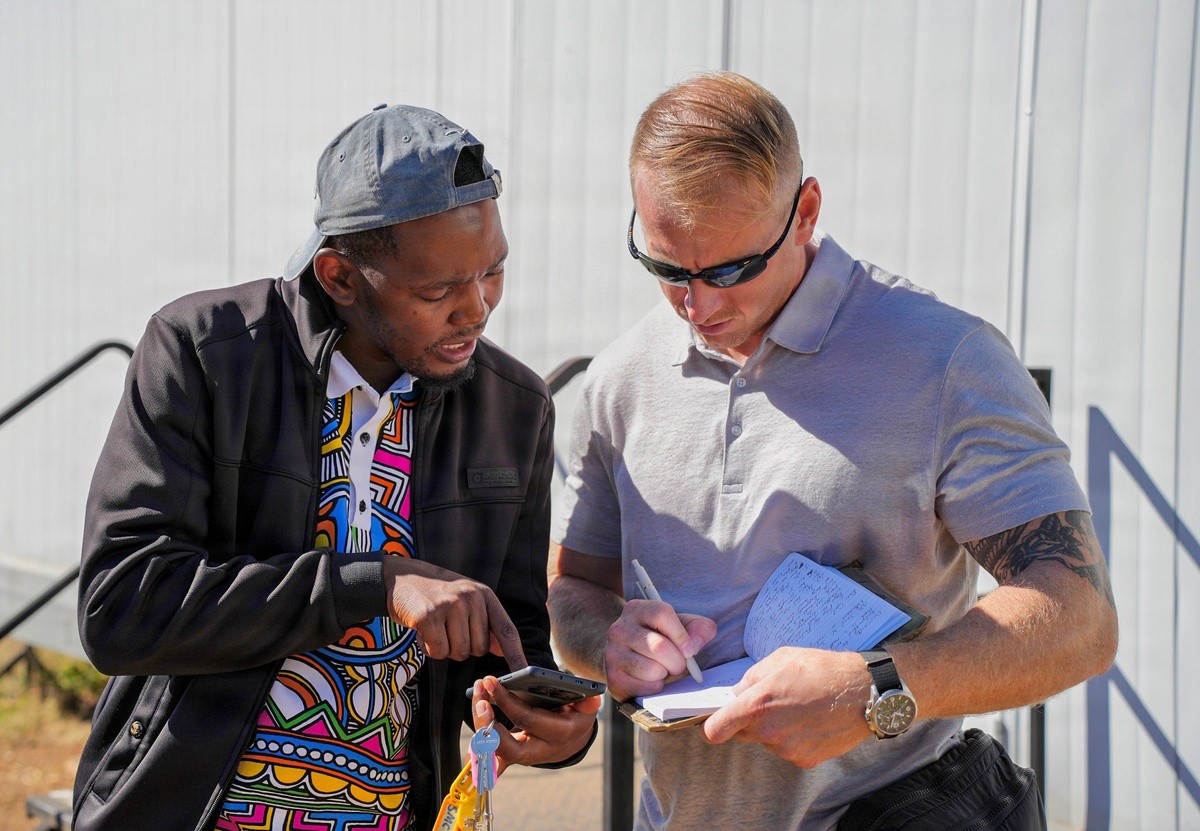
U.S. Army Master Sgt. Joseph Buth, right, team sergeant assigned to Civil Affairs Team Botswana, Bravo Company, Civil Affairs Battalion, U.S. Army Southern European Task Force, Africa (SETAF-AF), exchanges contact information after conducting an assessment of prefabricated clinics with Malefo Kgosimore, left, administrative officer-accountant at Bobonong Primary Hospital, in Bobonong, Botswana, May 9, 2026.

This civil affairs engagement is part of a country program monitoring assessment to ensure host nations have applied money or resources allocated for humanitarian aid toward an agreed purpose. (U.S. Army photo courtesy of Capt. Dylon Sheffer) (Photo Credit: Courtesy)

VIEW ORIGINAL

Back to 

U.S. Army Southern European Task Force, Africa

VICENZA, Italy – Soldiers assigned to Civil Affairs Team Botswana, Bravo Company, Civil Affairs Battalion, U.S. Army Southern European Task Force, Africa (SETAF-AF) conducted country program monitoring assessments of 14 medical clinics in various locations throughout Botswana, May 5-19.

CPM assessments represent in-person audits, often conducted by U.S. State Department employees or military personnel, to ensure host nations have applied money or resources allocated for humanitarian aid toward an agreed purpose. These assessments usually involve U.S. employees examining buildings or programs, as well as interviewing relevant individuals, as part of the verification process.

If assessors discover that resources have not gone toward the intended purpose, those resources are typically discontinued and applied elsewhere.

U.S. Army Capt. Dylon Sheffer, team leader for CA Team Botswana, explained that country program monitoring is a process the Pentagon uses to evaluate a country’s strategic conditions and how U.S.-funded projects affect those conditions.

Three U.S. Soldiers assigned to Civil Affairs Team Botswana, Bravo Company, Civil Affairs Battalion, U.S. Army Southern European Task Force, Africa (SETAF-AF), back row, speak with Head Nurse Elizabeth Maplenka, front row left, and Dr. Clement Mukawli, front row right, regarding a prefabricated clinic’s current use and benefits at the Kazungula Health Post in Kasane, Botswana, May 12, 2026.

This civil affairs engagement is part of a country program monitoring assessment to ensure host nations have applied money or resources allocated for humanitarian aid toward an agreed purpose. (U.S. Army photo courtesy of Capt. Dylon Sheffer) (Photo Credit: Courtesy)

VIEW ORIGINAL

“It involves three main groups: military personnel who conduct the CPM, the security cooperation organization of an embassy’s military group, and a combatant command reviewer,” Sheffer said.

Originally built for COVID-19 isolation and treatment, the prefabricated medical facilities erected in Botswana continue to support primary hospitals and clinics by providing space for medical care, isolation, post-surgery recovery and office space.

“Our mission involved assessing the physical condition, the past and current use, and the strategic impact of these investments within Botswana’s healthcare system,” Sheffer said. “Our secondary goals included collecting information and assessing the primary hospitals where most of the clinics were located.”

CA Team Botswana split into two teams to conduct their assessments of the facilities.

U.S. Soldiers assigned to Civil Affairs Team Botswana, Bravo Company, Civil Affairs Battalion, U.S. Army Southern European Task Force, Africa (SETAF-AF), right, conduct an engagement with a nurse, left, in Tshabong, Botswana, May 9, 2026.

This civil affairs engagement is part of a country program monitoring assessment to ensure host nations have applied money or resources allocated for humanitarian aid toward an agreed purpose. (U.S. Army photo courtesy of Staff Sgt. Forrest Dyer) (Photo Credit: Courtesy)

VIEW ORIGINAL

“Our assessments validated a high return on U.S. investment,” Sheffer said. “[Since] the COVID-19 pandemic, clinic staff and primary hospitals have resourcefully repurposed the modular units to alleviate space shortages at primary hospitals. The clinics are actively used for maternity and pediatric care, tuberculosis and cholera treatment, HIV testing and counseling, as well as outpatient overflow.”

Sheffer noted that not only did the assessment data validate the U.S. government’s return on investment, it justified further opportunities for future civil affairs operations and humanitarian funding, based on Botswana’s commitment to staffing and sustaining the facilities.

From a diplomatic standpoint, humanitarian investments help establish (or in certain cases, reestablish) an American presence in host nations, which provide opportunities to learn and build rapport by engaging with key leaders.

U.S. Soldiers assigned to Civil Affairs Team Botswana, Bravo Company, Civil Affairs Battalion, U.S. Army Southern European Task Force, Africa (SETAF-AF), left, conduct an engagement with Dr. Imile Muchapa, the chief medical officer of Masunga Primary Hospital, in Masunga, Botswana, May 8, 2026.

This civil affairs engagement is part of a country program monitoring assessment to ensure host nations have applied money or resources allocated for humanitarian aid toward an agreed purpose. (U.S. Army photo courtesy of Master Sgt. Joseph Buth) (Photo Credit: Courtesy)

VIEW ORIGINAL

“Investing in host-nation healthcare resilience and independence will further our bilateral relationship and demonstrate that the U.S. is the reliable partner of choice,” Sheffer said. “Local medical staff and civilians are highly appreciative of the U.S. medical facilities and do rely on them.”

Sheffer emphasized that although CA operations are nonlethal in nature, they have historically been a significant combat force multiplier.

“The civil environment is present in all operations, whether those operations focus on large-scale combat, counterinsurgency or humanitarian assistance,” Sheffer said. “CA teams train to increase freedom of movement for maneuver elements by, in part, countering the influence of bad actors on local populations. They also collect information through civil engagements and conduct civil reconnaissance to give commanders a greater understanding of their area of responsibility and consolidate gains through stability operations.”

Three U.S. Soldiers assigned to Civil Affairs Team Botswana, Bravo Company, Civil Affairs Battalion, U.S. Army Southern European Task Force, Africa (SETAF-AF), right, walk toward a prefabricated medical treatment building they will inspect with an administrative staff member, left, in Bobonong, Botswana, May 9, 2026.

This civil affairs engagement is part of a country program monitoring assessment to ensure host nations have applied money or resources allocated for humanitarian aid toward an agreed purpose. (U.S. Army photo courtesy of Master Sgt. Joseph Buth) (Photo Credit: Courtesy)

VIEW ORIGINAL

Going forward, Sheffer said his team plans to propose new funding requests based on their findings that support U.S. Africa Command’s objectives of promoting resilience and independence for Botswana’s Ministry of Health. Short-term goals include procuring critically depleted medical supplies such as antibiotics, specific prescription drugs and medical consumables. Other options include point-of-care diagnostic tests for tuberculosis, HIV and bacterial infections.

“Long term, we would like to propose medical capacity training through subject matter expert exchanges with a focus on advanced training for local nurses, midwives and lab technicians who conduct most primary care,” Sheffer said. “We also noted a few primary hospitals that would significantly benefit from the construction of more prefabricated clinics or permanent building additions on the hospital grounds.”

Related Stories

SETAF-AF spearheads civil-military engagement in Benin | March 6, 2026

U.S. Soldiers strengthen Tunisian Armed Forces’ civil-military operations capacity | Jan. 26, 2026

SETAF-AF conducts educational stability activities in Kenya | Aug. 31, 2025

About SETAF-AF

U.S. Army Southern European Task Force, Africa (SETAF-AF) prepares Army forces, executes crisis response, enables strategic competition and strengthens partners to achieve U.S. Army Europe and Africa and U.S. Africa Command campaign objectives.

Follow SETAF-AF on: FacebookTwitterInstagramYouTubeLinkedIn & DVIDS

2nd Armored Brigade Combat Team, 3rd Infantry Division Transformation Media Roundtable

Source: United States Army

PARTICIPANTS

Moderator: CPT Gabrielle Hildebrand (Army Public Affairs)

Speakers:

  • COL Alexis Perez-Cruz (Brigade Commander, 2/3rd ID)
  • LTC Joseph Steadman (Squadron Commander, 6/8 Cav Squadron)
  • SGM James Smith (Senior Enlisted Advisor, 3/15 Inf. Regt.)

Reporters:

  • Drew Lawrence (Defense Scoop)
  • Meredith Roaten (Janes)   
  • Hope Seck (Military Times)
  • Mike Stone (Reuters)
  • Carley Welch (Breaking Media)
  • Shelby Holliday (Wall Street Journal)
  • Matthew Beinart (Access Intel/ Defense Daily)
  • Sotaro Hata (Asahi Shimbun Newspaper)
  • Gina Cavallaro (AUSA Magazine)
  • Corey Dickstein (Stars and Stripes)
  • Evan Lynch (Signal Media)

TRANSCRIPT

CPT Gabrielle Hildebrand:
All right, we’re gonna go ahead and get started. Good morning, everyone. I’m Captain Gabrielle Hildebrand with Army Public Affairs and I’ll be moderating today’s media roundtable. We are fortunate to have direct, first-hand insight into Army continuous transformation initiatives and tactical combat lessons from the Rock of the Marne.

Joining us on the line from the Third Infantry Division is Colonel Alexis Perez-Cruz, commander of the 2nd Armored Brigade Combat Team; Lieutenant Colonel Joseph Steadman, 6th Squadron, 8th Cavalry Regiment commander; and Command Sergeant Major James Smith, Third Battalion, 15th Infantry Regiment senior enlisted advisor.

Before we get started, just a quick reminder on the ground rules pertaining to today’s discussion. This interview is established to discuss lessons learned from the critical training rotation at the National Training Center in Fort Irwin, California, from 15 June to 25 July of this year. This was done to certify readiness to rapidly deploy anywhere in the world, while simultaneously adapting to the modern battlefield by testing new and innovative systems, technologies, and formations as part of the Army continuous transformation.

The Spartan Brigade is leading the way in adopting the next Armored Brigade Combat Team task organization, employing cutting-edge capabilities inside its armored warfare arsenal against a simulated near-peer threat. We will discuss how they’ve created a culture of evolution and innovation, gaining actionable results for the warfighter.

I’d ask that you please keep your questions focused accordingly. Should you have questions beyond the scope of today’s discussion, I’m here and OCPA is ready to respond to queries after today’s interview. We are on the record today with comments attributed to the panelists. Please feel free to record today’s discussion, although I will be sending out a transcript.

Following Colonel Perez-Cruz’s opening remarks, I’ll be moderating questions and follow-on remarks. Everyone will have one question, and I’ll ask if you have a follow-up if time permits. I’ll circle back for another round of questioning, but please wait to be called upon. I’ll give a reminder when we only have time for one more question or if something is severely out of scope of what’s already been discussed. Please ensure your phone or whatever device you’re calling on is on mute while you are not communicating. We’ve allotted one hour for this morning, so we’re scheduled to end around noon.

Pending any questions, I’ll go ahead and turn it over to Colonel Perez-Cruz for his opening statements. Sir, you’ve got the floor.

COL Alexis “Pancho” Perez-Cruz:
Thank you very much, Gabrielle, for that introduction and for moderating this morning’s discussion. Good morning to everyone, and thank you all for taking time to join us today.

As Gabrielle said, my name is Colonel Alexis Perez-Cruz. I go by Pancho. I’m the commander of the Second Armored Brigade Combat Team in the Third Infantry Division. We also go by the Spartan Brigade, so technically my call sign is Spartan 6.

Our soldiers completed a rotation at the National Training Center just at the end of June. It was rotation 26-08. We were there testing new equipment and new formations against the most demanding desert terrain at Fort Irwin, CA, as part of the Army’s broader transformation and modernization initiatives. We walked away with real results, real data, and real experience putting these new capabilities to the test under some of the toughest conditions—and by conditions, I’ll say it’s the desert. The highs were around 117 degrees. Our soldiers drove thousands of miles. This is what the Army does when we train; we keep it in the most realistic place, the most realistic aspects, which includes here at Fort Stewart, Georgia.

Now, what did we really do? We reaffirmed that armor remains a critical and relevant asset for future fights. I’m really proud of this brigade. For the 25 months that I’ve commanded—I’ll change command next week—we’ve learned a lot, and we think we’ve provided quite a few lessons to the Army. With that, I’ll stop there and I’ll be happy to answer any questions.

CPT Hildebrand:
Thank you so much, Sir. We’ll begin with our first question from Drew Lawrence from DefenseScoop. Go ahead, Drew.

Drew Lawrence (DefenseScoop):
Great. Thank you, Sir. You just said that armor remains a critical branch for future fights. There’s been a lot of discussion about the role of the Armor branch in modern warfare. I don’t know if you saw it, but an article in the Small Wars Journal earlier this week has gotten a lot of attention in the armored community and was critical of the branch’s role in contemporary conflict in parts, stating it had, quote, “remained trapped in a reinforcing feedback loop that has facilitated armor’s fall from the Army and joint force’s breadwinner, to a community which is more or less at odds with warfare’s prevailing conditions.” If it’s not resolved rapidly, the branch could be, quote, “dead by 2035.”

I ask this as a former armor guy myself: you mentioned the branch being relevant to modern conflict. How so? Is it taking on a new role, and if so, how does that role differ from the way heavy units have operated in the past? Thanks.

COL Perez-Cruz:
Thanks for the question. I’m glad we have another armored officer here on the line. Yes, I read the article. Amos Fox is a SAMS grad, and I think he’s a professor at Arizona State, if I’m not mistaken, or University of Arizona—one of the two. It’s thought-provoking.

But in the end, here’s what I believe, and I believe the armor branch believes this: armor remains the only force capable of delivering decisive, large-scale shock and terrain seizure when windows of opportunity open. Now, is the battlefield changing in the way that we’re using technology, AI, drones, and space? Yes. The modern battlefield may limit some maneuver. But when deception, electronic warfare, and firepower create even just brief openings, armor formations are still the only elements that can rapidly penetrate, exploit, and hold ground at scale.

When you deploy an Armored Brigade Combat Team, what you’re actually deploying is the net explosive weight of five Mother of All Bombs, right? That’s not a small force to contend with. Trusting the armor soldiers—and when I say armor, I mean everyone in the Armored Brigade Combat Team—when you conduct combined arms maneuver, you can overwhelm and have an opening so that you can exploit and hold that ground. I’ll leave it there, and we can continue to discuss that if that’s what you would like.

CPT Hildebrand:
Drew, did you have a follow-up?

Drew Lawrence:
I do. You talked a little bit in the beginning about testing new capabilities for this NTC rotation. What new capabilities did you test? What performed well for the armor branch’s function, and what did not perform well and needs to improve for the armor branch’s function? Thanks.

COL Perez-Cruz:
I’m going to turn this one over to JP Steadman because he was my lead. Not that I don’t want to say it, but I want to highlight he did a lot of things. We gave him the MRRs, which are the medium reconnaissance UAVs, and the LRRs, and we also gave him the loitering munition, and he had EW as well. As my lead reconnaissance Lieutenant Colonel, because he’s the Cav squadron commander, I’d like him to discuss that. Go ahead, JP.

LTC Joseph Patrick (JP) Steadman:
Yes, Sir. That’s a great question, Mr. Lawrence. We had a lot. From our Switchblades to our various different UASs to our EW systems, I would say everything worked. Everything supported our operations.

The thing that was the best was the Switchblades, the loitering munitions that we had. We had almost 200 kills with those things alone. They were super responsive. We could get them 40 kilometers out, and we were able to strike almost at will against Blackhorse with the Switchblade. We did them notionally because we’re at the National Training Center and obviously we’re not going to do live fires while we’re doing force-on-force, but those appear to be a game changer on the battlefield for us.

When it comes to the various UASs for the short range and the medium range—we did not have the long-range UAS—those helped out a lot. As the Cav squadron, we were able to use those to support maneuver and bridge seams and gaps that we have with our maneuvering forces, enabling us to set conditions for the brigade.

Where we still struggle with UAS is really in the battery capability of these systems and the distance in which they can fly. We saw a degradation to how often we could fly because the heat of the desert started having issues with the batteries. Obviously, you won’t have that everywhere you travel in the world, but that’s something we need to clean up. The briefed distances for these systems is not what you can actually get out of them when you go and use them in real life. It’s a little different—the systems we’re getting versus the systems that you’re seeing Ukraine use on a daily basis—but we continue to build toward that and find ways to gain more distance out of the systems that we’re getting.

Regarding our EW systems, I’m 20 years and a couple months in the Army, and we’ve had EW for just about the entire time I’ve been in the Army, but our understanding of EW and our ability to use that down at the troop and platoon level, I saw really expand over the past year and a half while I’ve been in command. We’re finally getting systems that we can constantly train with, constantly use, and constantly see the effects from. That’s not only from the knowledge of our soldiers but also the policies we have in place to enable us to use these things in the exquisite ways they are designed to be used.

We also worked with Army Research Labs, ARL, on a new unmanned ground sensor system. We had them come out and put that in place. That was a relationship we had with the research lab that’s a little bit different than we’ve done in the past. We brought in a lower TRL level system to really start to understand it. We didn’t get the full effects we wanted from that system, but we understood what different autonomous systems doing different stuff for us could mean in the future, and it helped advance the research lab’s program probably by a couple of years compared to if they wouldn’t have partnered with us going out to NTC. I’ll pause there in case there’s any further questions.

COL Perez-Cruz:
One thing I’d like to add—this is Colonel Perez-Cruz—is that for all the capabilities JP just talked about, the way we utilized them is JP expanded the security zone. If you think about it from a standpoint of what do you want to make contact with first, you want to make contact with the smallest element possible. Continue to stay in contact with the enemy, but do you want to do it with humans? The answer is no. You want to do it with robots.

All those things that he was talking about were the first things we made contact with. The way we did it was we had ISVs that went forward—very light, very small, and maneuverable. They went to a position of advantage because they go faster than even the enemy could go. They would launch these things up, they would make visual or actual contact with fire, and then they would maneuver their Bradleys and tanks as hunter-killers. Once we could fix, we immediately started to exploit, penetrate their defenses or whatever line they had, exploit the initiative, hold ground, and then continue and do that over and over. That’s the OODA loop that we were using, which again, there’s nothing new in that. It’s just different tools in the kit bag that armor is using to decisively engage with our armor force.

CPT Hildebrand:
All right. Thank you, Sir. We’re gonna go to Meredith from Janes. Meredith, do you have a question?

Meredith (Janes):
Yes, I do. Thanks. Could you talk more about the Infantry Squad Vehicles and if there are any new tactics that you tried out during this NTC rotation with ISVs other than what you just mentioned? Thanks.

COL Perez-Cruz:
Go ahead, JP.

LTC Steadman:
As far as new tactics with it, I don’t know the tactics our IBCTs are using with them. But being an ABCT and getting ISVs for the first time was extremely helpful. Going back to what Colonel Perez said, to get to key terrain fast, there were multiple incidences during the rotation where we were able to take terrain that was 20 kilometers ahead of where the brigade was fighting. We were able to take it quickly, and we were able to take it without getting into contact because it was such a small force.

That was the anchor point that allowed us to pull our Bradleys and our tanks forward. When we were talking to the OC/T afterwards, that’s something you would never be able to do with a Bradley. Even though it’s got more protection, it’s big, it takes a lot of sustainment, and you can only maneuver that thing so far and in so many locations before the enemy knows right where you’re at. When you put personnel on the ground, which is what the ISV brings with it, you then seed that terrain and make it extremely difficult for the enemy to pull you out.

The only thing we really had to worry about with the ISVs, which is something we’ve been doing for decades, is what is the right sustainment package to go along with that platoon or section so that you can sustain for multiple days. Our plan was 72 hours, and it worked really well. The only thing I think from our perspective is we just didn’t have the right number of ISVs for that platoon to be able to bring the right amount of stuff to mitigate a high risk of the sustainment piece. So we were always concerned about reaching that 72-hour mark, but that’s because we went in with three ISVs per platoon because we just didn’t get fielded enough to be able to do the full construct of what we want to do. That is something that we’re going back in white papers to figure out the right number to be able to support that concept. But it was a great piece of equipment that enabled us to get after the mission and the intent that we wanted to.

CPT Hildebrand:
Meredith, do you have a follow-up?

Meredith:
I don’t.

CPT Hildebrand:
All right. Thank you. We’re gonna go to Hope with Military Times. Do you have a question?

Hope (Military Times):
I do. Thank you. I wanted to ask—and if this is something that’s already been previously addressed, great. But the brief talked about testing new combined arms maneuver tactics and I wanted to see if there were other tactics that you can talk about that you were testing out and what those entail.

COL Perez-Cruz:
For us, we really like not to get into the specific minute details of our tactics because those are the things that make the secret sauce for us. But in terms of utilizing the technology we had, imagine if instead of having only artillery and rocket artillery, now you have the loitering munition and you can utilize them in the same manner, targeting in front of your cavalry and in front of your infantry and armor. So that’s just one of the things that we can do, which again, I’m not sure that’s new as much as it is trying and utilizing what we talk about as soldier-driven solutions.

Our soldiers give a lot of feedback and they drive critical updates to our real-world needs. A lot of times we’ll think we can only use this thing for this one piece of the battle—like everything’s loitering munitions, you’re going to use them way in front, or you’re going to use them when you’re in the defense. Well, in offense we can also use them. By utilizing our scouts in the right position, they can be utilized as a support-by-fire to enable the actual movement of our tanks to get to the point of penetration to destroy our enemy. I think those are the ways in which we utilize them. I’m not certain there’s anything new in that, or anything out of this world.

LTC Steadman:
If I may follow up on what Colonel Perez said, I think one of the areas where we saw new techniques with combined arms is really the air-ground littoral region. Using our small UAS, using some of our small loitering munitions to really support the maneuver of our vehicles. We had different task organizations and different vehicle types, but really it was how we’re integrating the UAS to support maneuver, which is something we haven’t had a lot of opportunity to do, but we’ve been training on for a year. We saw that being extremely valuable as we went out there, and a little bit different than what we’re normally used to doing.

Hope:
Thank you very much.

CPT Hildebrand:
Hope, did you have a follow-up?

Hope:
Not at this time.

CPT Hildebrand:
Awesome. Thank you. And we’re gonna go to Mike with Reuters.

Mike (Reuters):
Thanks. I don’t have a question.

CPT Hildebrand:
All right. Thank you. Carly with Breaking Defense.

Carly (Breaking Defense):
Thank you and thank you all for doing this. Just a question more broadly. If all goes well, in the next two to four years, the Army will have new Bradleys and new Abrams with XM30 and the M1E3. Are you doing anything to prepare for that, and what that might look like?

COL Perez-Cruz:
Right now the Army is still not sure what that’s going to look like; that is why we were testing a lot of what we’re doing here. There are two designated modernization brigades. It was ourselves and Second Brigade of First Cav. Both of us did different solutions to what the future looks like, and part of this was to determine and get data to determine how we’re actually going to integrate those. I think the future of the armored force is the M1E3 and the XM30.

Looking at the future, in terms of how many soldiers we’re going to have in each one of those platoons, that’s still up in the air. I believe our former Deputy Commanding General, who is now the Commandant of the Armor School, that’s one of the big things he’ll be working on, is what the future looks like. But obviously it’s bright. We know we’re going to get new technology and we’re always improving.

Carly:
Can you share a little bit of the data? Without getting too in the weeds, what you discovered in terms of what that future force will look like if there were any big things that stood out that would point to what those new vehicles would look like in your formation?

COL Perez-Cruz:
Unfortunately, we actually don’t have that data. The data we recovered, we’ll give that to the larger Army, and then the next iteration of this will be where they use that data to configure and do another test. I mean, the tests are going to go on for a little while before the Army can decide that, and that’s way above my pay grade.

What I can tell you is, we tested our configuration with the ISVs, the Bradleys, tanks, and support. We have Sergeant Major Smith on the line, who is my Sergeant Major for 3-15 Infantry. We were able to give them ISVs in support of their Bradleys, which meant their Bradleys had less people in the back of them and were supporting infantry that were moving around in lighter vehicles.

CSM James Smith:
I can add on to that, Sir. The advantages that we saw, or the feedback we can give, is this technology can help us fill the gaps and get our capabilities out a lot faster as we move across the battlefield. So not necessarily that our tactics are changing or evolving so much, as much as our speed and our use for them and how protected we are as we move and how much distance we can maintain between us and the enemy.

As we try this new equipment, one thing I think will remain steady state regardless of the new equipment we get is that no matter how much technology we put into it, there needs to be a mechanical aspect to it. The soldiers are always going to be the end user at some point, so their understanding, their fitness, they will always be the fallback if technology goes down. The soldiers will always be ready to fight whatever the technology evolves to.

CPT Hildebrand:
Awesome. Thank you so much, Sergeant Major. We’re gonna move on to Shelby from the Wall Street Journal. Shelby, do you have a question?

Shelby (Wall Street Journal):
Hey all, I don’t have a question. I just want to say thanks for doing this.

CPT Hildebrand:
Thanks for joining us. Alright, so we’ll move on to Matthew from Defense Daily. Matthew, do you have a question?

Matthew (Defense Daily):
I do. Thank you. Appreciate you doing this. To dig in a little bit deeper from what Carly was asking about specifically on M1E3—is there any more details you can provide about the timeline for bringing in that feedback and lessons learned that can inform what it will mean to have a hybrid electric tank as part of the brigade? What are you looking at in terms of the timeline for getting prepared to have that new platform integrated with you guys?

COL Perez-Cruz:
We do not have that timeline and we’re not sure when that will be integrated; those decisions are at the Army level. For us, we did just receive the V3s which we’ve integrated, we integrated AMPVs, and we’ve integrated all the A4s. Our brigade was one of the four brigades that received the V3s, and we were the second brigade to have AMPVs. We do have the most modern equipment of any brigade right now.

In terms of where they’re going to put it, that’s still up in the air. Would we love to have a vehicle that has a hybrid engine that consumes less fuel? Absolutely. We think that if you’re going to do it, one of the premier places to do it would be the Third Infantry Division because of the amount of terrain we have here, over 220,000 acres. Although a lot of it is forest and swampland, it is perfect to be able to actually tell in a realistic environment if this technology will work. It’s a harsh environment all year long and we can test it out here right in our area of operation.

Matthew:
Got it. Appreciate that. A separate follow-up: you mentioned the AMPV. I know part of that effort has looked at offering modularity to be able to put different payloads on that platform, whether it’s more counter-drone focused or mortar focused. How has that effort gone in terms of highlighting new ways you would want to use the AMPV?

COL Perez-Cruz:
That’s a great question. We have the C2 variant, we have the two types of variants for ambulance—one being an evacuation and one being the Role 2 variant where we can actually do long-term care—and then we have the variant which also has the mortars. Every combined arms battalion has the variants with mortars, the C2 variant, and the medical variant.

They’ve been very good. I’ve been very impressed by them. Those vehicles have a lot of capability for the comm systems. The ability to use them as a power source because they produce enough amps and wattage to keep the batteries that JP talked about well-charged at all times. For us they work very well. They keep up with the tanks and Bradleys, which was always an issue with the old APCs which were Vietnam-era equipment. Having these modern vehicles, basically built on a Bradley chassis, is an outstanding piece of equipment. We were able to put our satellite-based comms on them and talk on the move, using all the levels of internet that we own on the move by utilizing the AMPVs.

CPT Hildebrand:
Awesome. Thank you so much. We’re gonna go to Sitaro. Do you have a question?

Sitaro:
Thank you for having me today. I’m good. Thank you.

CPT Hildebrand:
All right. Next, we’re going to go to Gina, AUSA Magazine. Gina, do you have a question?

Gina (AUSA Magazine):
Hi, this is Gina from Army Magazine. What iteration of your testing of this equipment are you in? How many more do you have to go? And how are soldiers reacting to the new equipment? Does it take a change of mindset among everyone to think of this as augmenting your capabilities rather than just being equipment that you can rely on?

COL Perez-Cruz:
This was a 25-month test where over the 25 months we did 30-day long-term training, 45-day long-term training, we went out to NTC and did leaders training, and then came back and did another 30 and 45-day training here on home base. We tested it here in the swamps in Georgia. Then we did another leaders training and went back to NTC to do it in the premier area for armor at Fort Irwin.

Our First Brigade will go back out in October and do their own tests, so internally to the division, this is probably our third one. There will be multiple others within First Cav. In terms of the campaign of learning, since we’re designated the Modernization Brigade, we’ve been experimenting with organizational structure and testing this cutting-edge equipment to preserve our technological edge.

The soldiers have taken to it. Our soldiers are our strength. They are the thing that keeps us in a position of advantage. The soldiers have the solutions, and the more you give them the equipment to test, the more they’re going to figure out how to break it so that we know what the limitations are, or how to use it in a way that we never thought about using it, because they are being innovative. They are exactly what the American soldier is supposed to be. They are the ones that actually come up with how we use this equipment.

CSM Smith:
The soldiers are super smart and technology-savvy. As they find problems, they have solutions, or ideas for solutions that some of us old-timers don’t think of. Regarding how much testing we’re going to do, we’re not training towards a specific adversary right now as we did in the Iraq and Afghanistan wars. We’re constantly training to a standard to deploy and always trying to get better. I don’t think testing is going to end until we’re actioning on a battlefield somewhere. The soldiers are giving us their feedback and ideas, and we’re executing those with our Innovation Cell here at Fort Stewart, with our defense industry always improving our products so we can be better on the battlefield.

LTC Steadman:
I’ve got a quick follow-up to that too. I love that question. That is something we’ve been trying to cultivate throughout our formation. I often tell our leaders that it’s not me or a company commander who’s going to come up with the next big idea. It’s the 19-year-old Bradley driver who used to code computers in their basement that is going to come up with the next idea. But you’ve got to create the culture where they’re willing to speak up. We’ve done that here in this brigade, and the Army’s messaging of transformation and innovation is really helping with that too.

We have an Innovation Center here at 3rd ID where anybody can walk in and say, “I’ve got a problem, how do I help solve it?” One of the outcomes of that this past year is we got all this UAS stuff, but you couldn’t fly it inside of a Bradley or on the move; you had to be stationary. That doesn’t work for an Armored Brigade Combat Team; we move really far, really fast. We had soldiers at the platoon level say, “How do we fix this?” They worked with the Innovation Center and figured out how to fly things from inside the Bradley and the JLTV. We went to NTC, and what I was told by our OC/Ts is we were the first unit to fly the small, medium, and launched effects on the move. That helped us extend our reach, and that was only because soldiers looked at that problem and solved it.

Gina:
Thank you gentlemen for the answer. And maybe this is for Pancho. Going a little bit back to Drew’s question at the beginning. How does an armored brigade avoid the static positions that we have witnessed early on with the Russo-Ukrainian conflict?

COL Perez-Cruz:
That’s a great question. Very insightful. The way we avoid that is combined arms maneuver, period. A lot of times we look at other armies and say, “What’s going to happen to us?” We have to understand that we have a professional army that are not conscripts. In the conflict there, the average age has gone up over the years, so you’re talking about folks who don’t have the experience that our soldiers have.

This is why it’s critical that we do these exercises. Over the last two years, our brigade has spent over 200 days in the field on their tanks, on their Bradleys, maneuvering, learning the fundamentals. Brilliance at the fundamentals—brilliant at the basics. That’s where we’re going to be able to create the ability to maneuver as a maneuver force, control key terrain, penetrate the enemy’s defense, exploit, and seize the initiative to get to the next key terrain. That’s something you’re not seeing there because they are overwhelmed by the firepower happening with all the drones, but the reality is that’s happening because their armor force doesn’t have the same experience that ours does. There are not a lot of forces out there willing to do 200 days in the field and continue to train their formations for the likelihood of being deployed.

CPT Hildebrand:
Awesome. Thank you so much. We’re gonna move to Corey from Stars and Stripes. Corey, do you have a question?

Corey (Stars and Stripes):
I do. Thanks gentlemen for doing this today. The battery and power generation issue. Have you guys had a chance to really AAR and look at that issue and come up with any solutions moving forward in extreme heat like that?

LTC Steadman:
Through some discussion with leaders on the ground, some of that appears to be just how we are doing our loads on our vehicles—not putting batteries on top where it’s constantly under the sun. Some of it’s spreading out the vehicles that can actually recharge the batteries versus putting them on a single vehicle and that vehicle going down. I think a lot of it is more our techniques and procedures associated with how we operate. We just fell into some traps since it was our first time really doing that at the National Training Center.

They are looking at that at the troop level. We’re talking about that with the UAS platoon and figuring out the right way to adjust it. Do I think it’s solvable at our level? 100% I do. It’s just understanding the different types of terrains that we work in and the different weather that comes with that.

Corey:
And then I’m also curious about the defensive side of everything. Obviously counter-UAS and especially counter-small UAS has been a big problem spot for the military at large. What did you guys see out of Blackhorse in that realm, and what were you able to accomplish on the defensive side? What do you need to improve on or what would you recommend the Army look at?

COL Perez-Cruz:
First off, I don’t think at our level we have enough of the technology. With current conflicts, a lot of that is being tested elsewhere in real life. We’re just scratching the surface on counter-UAS. I’ll let JP talk about some of his experience because he’s got some good experience with this.

LTC Steadman:
That is the biggest capability gap that we have as an Armored Brigade Combat Team. In order to maintain maneuver, if we can’t do something about the enemy’s UAS and do it rapidly, then we’re not going to be successful at continuing to maneuver, and we as an Army are continuing to figure that out. There are a lot of great projects going on way above us.

The way we addressed it as a Cav squadron, since we were most likely going to be the first force to hit that level of defense, we spread out so the enemy couldn’t mass any of their systems if we were not massed into a single location. We assumed risk on our own ability to mass fires, we assumed risk on communications, we assumed risk in a lot of areas in order to be big and spread out so they could not mask things on us and could not take out all of our systems at once. And that worked. It took a lot of work and training to operate as wide and as deep as we operated, but we did not see an overwhelming impact to our operations based off the enemy counter-UAS systems. It made it harder in other areas, but we were still able to achieve the security zone and achieve the mission without having huge impacts.

CPT Hildebrand:
All right. Thank you so much. We’re going to go on to Dan from The Well News. Dan, do you have any questions? Actually, I don’t think Dan’s here. I’m gonna go to Gordon.

Gordon:
I didn’t have any questions per se, but I’m writing something on a more broadly structured basis looking at the long periods of how the Army approaches change. The whole concept of the continuous transformation is fascinating because it does impose some real challenges. I assume that’s being received down through the ranks as something that’s just never going to stop.

COL Perez-Cruz:
That’s a great observation. This is going to be something that we’re going to continuously do. As long as we approach that from the campaign of learning. We have lessons learned; those lessons are shared with the other brigades, then validated during deployments, whether to Europe or to Korea. We update the concepts and the tactics and then provide a feedback loop back to the Big Army, our higher headquarters, TRADOC, who does training and doctrine, so that we can change with the times and we’re not just stuck on what we’re doing.

CPT Hildebrand:
All right, awesome. And we’re gonna go to Evan from Signal Media. Evan, do you have a question? Is Evan still here? Nothing heard. OK. It looks like we do have time for a couple more follow-ups. Did anybody have another question that they wanted to ask?

Drew Lawrence:
Hey, this is Drew with DefenseScoop. Am I good to ask a question?

CPT Hildebrand:
Go ahead, Drew.

Drew Lawrence:
So I’d be remiss if I didn’t ask a question about our maintainer and logi friends here. Colonel Steadman, you mentioned the Air Ground Littoral (AGL). It’s a hot topic, and I wanted to hone in on it because it’s defined as contested airspace, and it requires maneuvering units to be really fast, which tanks and Bradleys can be. But in an ABCT there’s a heavy maintenance, logistics, and supply requirement to support that maneuver, which in a contested environment can create vulnerability. How does the ABCT control the AGL, and how are you all thinking about some of the logistics and supply qualities of an ABCT when it comes to a contested environment and preventing vulnerabilities there?

LTC Steadman:
We thought about this a lot: how do we sustain ourselves as a Cav squadron based off the distances we’re going to be operating at? The only way we were able to do that is we looked at new ways to push fuel and other sustainment down to the troop level so that they had their own forward logistics element minus forward with them at the troop level, so we weren’t delaying the troop’s ability to move to the next step. I think the stat is Cav squadrons typically culminate at the National Training Center within 48 hours because they can’t move fast enough and they can’t refuel fast enough in order to move to the next step. That never happened to us based off the way that we pushed sustainment forward versus keeping it back and pushing it forward later.

As far as the AGL is concerned with that, it’s hard, and I would tell you we don’t have a good answer. Going back to my statement before, until we solve the counter-UAS problem, we’re never going to fully own the AGL. We did push various small systems to our sustainers, so as they were maneuvering across the battlespace in contested environments forward of the Cav, they had something to clear the next forward line or the dead space before they actually drove past it, which was different than what my experience has been in the past. Did they do it well? Sometimes yes, sometimes no. That takes continued practice, but we wanted to make sure our distribution platoon understood that they maneuver no different than a tank company or a Bradley company, and the same fundamentals apply. We trained them that way, and we saw some level of wins coming off of that.

CPT Hildebrand:
Awesome. Thank you so much, Sir. OK. So thank you, ladies and gentlemen. We’re just about out of time here, but I want to make sure I offer Colonel Perez-Cruz an opportunity to provide any closing comments, Sir.

COL Perez-Cruz:
Thank you very much. Thanks to everybody for being on this call, being interested in our Army, and telling the story of our soldiers, because in the end, this is really about soldier-driven solutions. At the Third Infantry Division, we have our Innovation Center where our soldiers come up with solutions every day to wicked problems that the Army has, and sometimes even our engineers can’t come up with because they have the background to just think about the solutions for these problems.

But not only that, we have soldier solutions down at the infantry squad level. Our mechanics will come up with solutions on their own. This is nothing new. Whether it was during the Battle of the Bulge, when mechanics were the ones who welded equipment on the front of the tanks to get through the hedgerows, we’ve been doing this. We will continue to do this, and it’s really about our American soldier and the resilience that the American soldier has, especially in times of crisis. For us, it’s all about being able to train the American soldier, mastering the fundamentals, and being brilliant at the basics. Thanks for all your help in making the public aware of what our American soldiers do.

CPT Hildebrand:
Thank you so much, Sir. Thank you again everybody. This concludes today’s conversation. Please feel free to reach out to me here at ACOO for any follow-up questions or concerns. Thank you.

Army Rededicates M&RA, G-1 September 11 Memorial

Source: United States Army

Members of the Army G-1 / Manpower & Reserve Affairs and families of victims of the Sept. 11, 2001 terrorist attacks on the Pentagon participate in an unveiling ceremony for an updated memorial at the Pentagon, Washington, D.C., July 15, 2026. The memorial, dedicated to the lives of the Soldiers and Army Civilians who lost their lives in the Sept. 11 attacks. The families of Lt. Gen. Timothy J. Maude, Sgt. Maj. Lacey B. Ivory, and Sgt. Maj. Larry L. Strickland received tokens of gratitude in their honor. (U.S. Army photo by Staff Sgt. Alexander Nieves) (Photo Credit: Staff Sgt. Alexander Nieves) VIEW ORIGINAL

WASHINGTON — Nearly twenty-five years after the tragic events of Sept. 11, 2001, members of the ASA, Manpower & Reserve Affairs (M&RA) / Army G-1 gathered at the Pentagon today alongside families of the fallen and survivors to rededicate the “ASA M&RA G-1 9-11 Memorial,” honoring the Soldiers and Army Civilians who lost their lives that day.

The unveiling ceremony revealed a restored memorial that was originally dedicated 20 years ago in the aftermath of the attack, enduring as both a tribute to those who made the ultimate sacrifice and a powerful reminder of the Army’s enduring mission to safeguard the homeland and stand ready in defense of the American people.

“September 11, 2001, started like any other mild fall day here in Northern Virginia, but that ended at 9:37 a.m., when American Airlines Flight 77 struck the Pentagon, claiming a total of 184 lives,” said Mr. Roy Wallace, Assistant Deputy Chief of Staff, G-1, host of the ceremony and himself a survivor of the attack. “For many years following, we have walked up and down Corridor Four, admiring the memorial tribute to our 9/11 heroes.”

Over the years, however, photos featured in the memorial of those killed while working in the ASA M&RA / Army G-1 offices began to fade in the constant overhead lighting. The frosted glass protecting the memorial obscured the carved inscriptions on the plaque inside, and a passing observer would not be able to discern the original 1941 limestone decorating the memorial backdrop.

“That wouldn’t do,” said Mr. Wallace. “So, we set our sights on revitalizing our memorial because it was important to our family.”

The family to which Mr. Wallace refers is the ASA M&RA / Army G-1 team serving at that time 25 years ago. Twenty-nine heroes are honored in the memorial today, which sits just outside the ASA M&RA / Army G-1 offices.

To counteract the effects of time that had weathered the original display, new photographs, improved glass plating and a large plaque, hung in the center of a wreath of smiling faces, make up the restored memorial.

Before the conclusion of the ceremony, Mr. Wallace hand-delivered the original photographs to their respective families along with a framed copy of the new memorial display, which included the families of Lt. Gen. Timothy J. Maude, Sgt. Maj. Lacey B. Ivory and Sgt. Maj. Larry L. Strickland.

“Today’s M&RA and G-1 teams carries on their mission, taking care of our Soldiers, Civilians, and families, just like they did 25 years ago,” Mr. Wallace said, concluding the ceremony. “They set the standard of selfless service that we strive to continue and improve every day. You will always be in our hearts and prayers, a member of the M&RA, G-1 family.”

Army announces Project Convergence-Capstone 6: A milestone in modernization

Source: United States Army

U.S. Army Staff Sgt. Jeremy Ephriam, assigned to 36th EN BDE, prepares a Ground Obstacle Breaching Lane Neutralizer drone (GOBLIN) for launch during Project Convergence-Capstone 5 (PC-C5) on Fort Irwin, Calif., in March 2025. PC-C5 showcases multi-domain concepts, demonstrates advanced future capabilities and experiments with future concepts for the Army, Joint Services, and Multinational allies and partners. (Photo Credit: U.S. Army photo by Sgt. Marita Schwab) VIEW ORIGINAL

WASHINGTON — The U.S. Army will execute Project Convergence-Capstone 6 from July 20 to July 29 at Fort Irwin, California. Directed by Lt. Gen. Michael McCurry, commanding general of the Army Futures and Concepts Command, PC-C6 aims to rigorously experiment with future technologies by significantly expanding the scope, scale and complexity of operations previously tested at the 4th Infantry Division’s Ivy Sting and Ivy Mass exercises.

The central focus of PC-C6 is the continued validation of the Next Generation Command and Control architecture, designed to ensure U.S. and allied forces can achieve and maintain decision dominance in complex, high-threat environments.

“PC-C6 is the largest experiment in the history of the program, delivering a critical opportunity to continue validation of NGC2 architecture at operational scale,” McCurry said. “By leveraging an Army division, we are not only testing over 100 emerging technologies in a realistic environment, and we are actively enhancing the future capabilities of our operational forces.”

Underscoring the importance of international partnerships in modern conflict, PC-C6 will feature robust multinational participation. The 4th Infantry Division will train and operate alongside allied forces from the United Kingdom, Australia, New Zealand and Canada. This combined effort will test tactical system interoperability and strategic alignment among coalition partners.

“The Soldiers of the 4th Infantry Division will incorporate the newest ideas and technologies into their movements at Fort Irwin, providing Soldier feedback on Army command and control,” said Brig. Gen. Daniel Hibner, commander of the Army Joint Modernization Command and PC-C6 deputy director.

The data and insights gathered during this intensive 10-day event will serve as a foundational element for the Army’s modernization trajectory. Outcomes from PC-C6 are expected to directly inform acquisition decisions to ensure the Army is prepared for future threats.

For additional information please contact the Army Communications and Outreach Office through the media query form.

Industry, economics and innovation a focus at the African Chiefs of Defense Conference 2026

Source: United States Army

1 / 3 Show Caption + Hide Caption – Nathan Nwachuku, physicist and techno-industrialist, co-founder of Terra Industries, shares remarks in an innovation solutions panel during the 2026 African Chiefs of Defense Conference in Luanda, Angola July 1, 2026. The panel brought together military and industry leaders to discuss emerging technologies, strengthen collaborative approaches to innovation, and identify solutions to shared security challenges across Africa.

Chiefs of Defense and representatives from more than 35 countries as well as U.S. and partner military leaders gather for the 2026 African Chiefs of Defense Conference. ACHOD serves as the key forum for senior military officials to address shared security threats, enhance regional stability, and discuss collaborative frameworks that enable long-term investment and economic growth across the continent. (Photo by Jason Johnston) (Photo Credit: Jason Johnston)

VIEW ORIGINAL

2 / 3 Show Caption + Hide Caption – U.S. and African senior military leaders engage with defense industry representatives during the 2026 African Chiefs of Defense Conference (ACHOD) in Luanda, Angola, July 1, 2026. The engagement connected military leaders with industry partners to discuss innovative technologies, strengthen defense collaboration, and explore capabilities that support shared security priorities across Africa.

Chiefs of Defense and representatives from more than 35 countries as well as U.S. and partner military leaders gather for the 2026 African Chiefs of Defense Conference. ACHOD serves as the key forum for senior military officials to address shared security threats, enhance regional stability, and discuss collaborative frameworks that enable long-term investment and economic growth across the continent. (U.S. Army photo by Staff Sgt. Raquel Birk) (Photo Credit: Staff Sgt. Raquel Birk)

VIEW ORIGINAL

3 / 3 Show Caption + Hide Caption – From the left, U.S. Army Col. Sean McClure, military advisor, Africa Center for Strategic Studies; Dr. Carlos Maria Da Silva Feijo, legal scholar, practitioner, and former statesman; Bethany Aquilina Brez, vice president of the Office of Foreign Policy at the U.S. International Development Finance Corporation; Mark Mitchell, deputy assistant secretary for the Office of Middle East and Africa at the International Trade Administration, participate in a panel discussing economic opportunity, linking stability and prosperity during the 2026 African Chiefs of Defense Conference in Luanda, Angola June 30, 2026. Experts emphasized how financial prosperity and regional security are deeply intertwined. The session highlighted that building stable, resilient economies is a vital defense strategy for preventing conflict and securing long-term growth across the continent.

Chiefs of Defense and representatives from more than 35 countries as well as U.S. and partner military leaders gather for the 2026 African Chiefs of Defense Conference. ACHOD serves as the key forum for senior military officials to address shared security threats, enhance regional stability, and discuss collaborative frameworks that enable long-term investment and economic growth across the continent. (Photo by Jason Johnston) (Photo Credit: Jason Johnston)

VIEW ORIGINAL

Back to 

U.S. Army Southern European Task Force, Africa

LUANDA, Angola– The African Chiefs of Defense Conference 2026 has concluded, but the critical security issues addressed during the summit will remain an enduring focus for U.S. Africa Command in the months and years ahead.

The conference brought together African and U.S. defense professionals to tackle a wide spectrum of regional security challenges. New to this year’s agenda was a focus on the intersection of defense and economics, examining how these forces merge to drive innovation both on and off the battlefield.

Industry Roundtable

A major highlight of this year’s event was a dedicated industry roundtable. This session brought senior U.S. officials with American and African industry leaders together to address operational hurdles and identify solutions for defense-industrial partnerships across the continent.

“For the first time at ACHOD, we hosted an entire engagement dedicated specifically to innovation and defense economics,” said Mr. Levi Alexis of the AFRICOM Office of Defense Economics. “With more than 11 U.S. and African industry partners participating, we successfully connected key decision-makers to explore strategic solutions for Africa’s security challenges while unlocking vital economic opportunities.”

The roundtable was hosted by Brig. Gen. Eero R.Keravuori, AFRICOM Deputy Director for Strategy, Engagements, and Plans, and featured senior leaders from the U.S. Department of War and the U.S. Department of Commerce.

The primary objective of the roundtable was to gather direct, actionable feedback from private industry regarding persistent operational barriers in Africa. Industry executives shared critical insights on capital risks, bureaucratic rigidity, asymmetric competition, and limited defense budgets.

To mitigate these challenges, participants proposed several strategic pathways:

  • Adopting an integrated DIME (Diplomatic, Information, Military, and Economic) approach to align defense efforts with economic development.
  • Leveraging new risk-mitigation frameworks through the Export-Import Bank and the U.S. International Development Finance Corporation underwriting.
  • Enhancing data protection in joint business ventures.
  • Tailoring security solutions to directly support and appeal to local African populations.

The panel highlighted the Lobito Corridor, a U.S.-backed joint railway venture connecting Angola and the Democratic Republic of the Congo, as a premier model of how governments and private industry can collaborate to unlock new markets and generate regional stability.

“In the same way that the Nile, the Tigris and Euphrates or the mighty Mississippi Rivers created an economic platform for all kinds of opportunities in agriculture, industry, and to live and work, the Lobito Corridor creates huge opportunities for economic activity in the communities surrounding this important economic artery,” said Mark Mitchell, Deputy Assistant Secretary for the Office of Middle East and Africa Global Markets, International Trade Administration, who represented the U.S. Department of Commerce.

Forums Focus on Stability, Prosperity, and Tech Innovation

Beyond the roundtable, the conference featured a deep dive into defense economics through two targeted forums: Economic Opportunity and Innovating Solutions. These panels featured senior African military leaders, a prominent African technology executive, and key U.S. agency representatives.

Economic Opportunity – Linking Stability and Prosperity

This session featured Bethany Aquilina Brez, Vice President of the Office of Foreign Policy at the DFC, alongside Mark Mitchell.

Brez outlined the DFC’s core mission and explained how African nations can leverage the agency to secure direct foreign investment. She emphasized that the DFC can potentially provide up to$1 billion in political risk insurance for commercial enterprises, a factor that could fundamentally shift risk calculations for companies looking to enter African markets.

Mitchell provided specialized market analysis on high-value sectors, including energy, rare earth minerals, and defense-related industries. He reiterated that strong international partnerships are foundational to establishing the secure environments necessary to attract foreign direct investment.

“It’s important to think about modern economic opportunities as pieces of a giant puzzle. Digital transformation goes hand in hand with viable energy infrastructure and critical minerals and manufacturing. While each piece (or system) is valuable on its own and operates independently, it’s their synergy, run in any combination, that create extraordinary value,” Mitchell added.

Innovating Solutions – Beyond Technology in Operations

This forum featured Nathan Nwachuku, Chief Executive Officer of Terra haptix—a leading commercial drone manufacturer in Africa—alongside Lt. Gen. Mohammed Berrid, Inspector General of the Royal Moroccan Armed Forces, and other AFRICOM representatives.

The discussion centered on how militaries can partner with civilian tech firms to accelerate technological adaptation, achieve production at scale, and synchronize operational planning. Panelists specifically focused on how African nations can adapt to rapid advancements in drone warfare and why cultivating a sovereign domestic defense industrial base is vital to securing long-term peace.

“It was a great conference, I love that there is clearly a new focus from AFRICOM and allied African nations on sovereign defense capability for the continent,” said Mr. Nwachuku. “It’s clear that Africa can’t keep relying on imported security architecture to defend itself against terrorism and insurgency but must develop pan-African defense industrial base to bring lasting peace.”

At the conclusion of the conference it was clear that defense economics and commercial innovation emerged as central pillars key to long-term strategy on the continent.

“Ultimately, these forums were not just focused on security; they sought to see how we enable African partners to find innovative solutions that work for them, and the key interaction between security and industry,” said Gen. Dagvin Anderson, commander, AFRICOM. “It’s what can we do to build economic opportunity that creates lasting stability that leads to investment that creates opportunities for prosperity.”

About U.S. Africa Command

U.S. Africa Command, one of 11 U.S. Department of Defense combatant commands, has an area of responsibility covering 53 African states, more than 800 ethnic groups, over 1,000 languages, vast natural resources, a land mass that is three-and-a-half times the size of the U.S., and nearly 19,000 miles of coastland. Working alongside its partners, AFRICOM counters transnational threats and malign actors, strengthens security forces and responds to crises.

Related Articles:

About SETAF-AF

U.S. Army Southern European Task Force, Africa (SETAF-AF) prepares Army forces, executes crisis response, enables strategic competition and strengthens partners to achieve U.S. Army Europe and Africa and U.S. Africa Command campaign objectives.

Follow SETAF-AF on: FacebookTwitterInstagramYouTubeLinkedIn & DVIDS

Pennsylvania National Guard hosts Côte d’Ivoire Armed Forces at Fort Indiantown Gap

Source: United States Army

1 / 14 Show Caption + Hide Caption – Senior leaders from the Côte d’Ivoire Armed Forces (FACI), accompanied by Pennsylvania National Guard leadership receive a demonstration of capabilities during a tour of multiple facilities here, June 26, 2026, including: the Training Support Center (TSC); the Eastern Army National Guard Aviation Training Site (EAATS); the 166th Regiment – Regional Training Institute (RTI); the Medical Battalion Training Site (MBTS); the Northeast Counterdrug Training Center (NCTC); Task Force Cyber and the Unmanned Aircraft Systems Training and Innovation Facility.

The tour showcased the installation’s premier training environments and marked the transition of the recently signed State Partnership Program (SPP) agreement into active, operational military-to-military engagement focusing on joint readiness and innovation. (U.S. Army National Guard photo by Wayne V. Hall) (Photo Credit: Wayne Hall)

VIEW ORIGINAL

2 / 14 Show Caption + Hide Caption – Senior leaders from the Côte d’Ivoire Armed Forces (FACI), accompanied by Pennsylvania National Guard leadership receive a demonstration of capabilities during a tour of multiple facilities here, June 26, 2026, including: the Training Support Center (TSC); the Eastern Army National Guard Aviation Training Site (EAATS); the 166th Regiment – Regional Training Institute (RTI); the Medical Battalion Training Site (MBTS); the Northeast Counterdrug Training Center (NCTC); Task Force Cyber and the Unmanned Aircraft Systems Training and Innovation Facility.

The tour showcased the installation’s premier training environments and marked the transition of the recently signed State Partnership Program (SPP) agreement into active, operational military-to-military engagement focusing on joint readiness and innovation. (U.S. Army National Guard photo by Wayne V. Hall) (Photo Credit: Wayne Hall)

VIEW ORIGINAL

3 / 14 Show Caption + Hide Caption – Senior leaders from the Côte d’Ivoire Armed Forces (FACI), accompanied by Pennsylvania National Guard leadership receive a demonstration of capabilities during a tour of multiple facilities here, June 26, 2026, including: the Training Support Center (TSC); the Eastern Army National Guard Aviation Training Site (EAATS); the 166th Regiment – Regional Training Institute (RTI); the Medical Battalion Training Site (MBTS); the Northeast Counterdrug Training Center (NCTC); Task Force Cyber and the Unmanned Aircraft Systems Training and Innovation Facility.

The tour showcased the installation’s premier training environments and marked the transition of the recently signed State Partnership Program (SPP) agreement into active, operational military-to-military engagement focusing on joint readiness and innovation. (U.S. Army National Guard photo by Wayne V. Hall) (Photo Credit: Wayne Hall)

VIEW ORIGINAL

4 / 14 Show Caption + Hide Caption – Senior leaders from the Côte d’Ivoire Armed Forces (FACI), accompanied by Pennsylvania National Guard leadership receive a demonstration of capabilities during a tour of multiple facilities here, June 26, 2026, including: the Training Support Center (TSC); the Eastern Army National Guard Aviation Training Site (EAATS); the 166th Regiment – Regional Training Institute (RTI); the Medical Battalion Training Site (MBTS); the Northeast Counterdrug Training Center (NCTC); Task Force Cyber and the Unmanned Aircraft Systems Training and Innovation Facility.

The tour showcased the installation’s premier training environments and marked the transition of the recently signed State Partnership Program (SPP) agreement into active, operational military-to-military engagement focusing on joint readiness and innovation. (U.S. Army National Guard photo by Wayne V. Hall) (Photo Credit: Wayne Hall)

VIEW ORIGINAL

5 / 14 Show Caption + Hide Caption – Senior leaders from the Côte d’Ivoire Armed Forces (FACI), accompanied by Pennsylvania National Guard leadership receive a demonstration of capabilities during a tour of multiple facilities here, June 26, 2026, including: the Training Support Center (TSC); the Eastern Army National Guard Aviation Training Site (EAATS); the 166th Regiment – Regional Training Institute (RTI); the Medical Battalion Training Site (MBTS); the Northeast Counterdrug Training Center (NCTC); Task Force Cyber and the Unmanned Aircraft Systems Training and Innovation Facility.

The tour showcased the installation’s premier training environments and marked the transition of the recently signed State Partnership Program (SPP) agreement into active, operational military-to-military engagement focusing on joint readiness and innovation. (U.S. Army National Guard photo by Wayne V. Hall) (Photo Credit: Wayne Hall)

VIEW ORIGINAL

6 / 14 Show Caption + Hide Caption – Senior leaders from the Côte d’Ivoire Armed Forces (FACI), accompanied by Pennsylvania National Guard leadership receive a demonstration of capabilities during a tour of multiple facilities here, June 26, 2026, including: the Training Support Center (TSC); the Eastern Army National Guard Aviation Training Site (EAATS); the 166th Regiment – Regional Training Institute (RTI); the Medical Battalion Training Site (MBTS); the Northeast Counterdrug Training Center (NCTC); Task Force Cyber and the Unmanned Aircraft Systems Training and Innovation Facility.

The tour showcased the installation’s premier training environments and marked the transition of the recently signed State Partnership Program (SPP) agreement into active, operational military-to-military engagement focusing on joint readiness and innovation. (U.S. Army National Guard photo by Wayne V. Hall) (Photo Credit: Wayne Hall)

VIEW ORIGINAL

7 / 14 Show Caption + Hide Caption – Senior leaders from the Côte d’Ivoire Armed Forces (FACI), accompanied by Pennsylvania National Guard leadership receive a demonstration of capabilities during a tour of multiple facilities here, June 26, 2026, including: the Training Support Center (TSC); the Eastern Army National Guard Aviation Training Site (EAATS); the 166th Regiment – Regional Training Institute (RTI); the Medical Battalion Training Site (MBTS); the Northeast Counterdrug Training Center (NCTC); Task Force Cyber and the Unmanned Aircraft Systems Training and Innovation Facility.

The tour showcased the installation’s premier training environments and marked the transition of the recently signed State Partnership Program (SPP) agreement into active, operational military-to-military engagement focusing on joint readiness and innovation. (U.S. Army National Guard photo by Wayne V. Hall) (Photo Credit: Wayne Hall)

VIEW ORIGINAL

8 / 14 Show Caption + Hide Caption – Senior leaders from the Côte d’Ivoire Armed Forces (FACI), accompanied by Pennsylvania National Guard leadership receive a demonstration of capabilities during a tour of multiple facilities here, June 26, 2026, including: the Training Support Center (TSC); the Eastern Army National Guard Aviation Training Site (EAATS); the 166th Regiment – Regional Training Institute (RTI); the Medical Battalion Training Site (MBTS); the Northeast Counterdrug Training Center (NCTC); Task Force Cyber and the Unmanned Aircraft Systems Training and Innovation Facility.

The tour showcased the installation’s premier training environments and marked the transition of the recently signed State Partnership Program (SPP) agreement into active, operational military-to-military engagement focusing on joint readiness and innovation. (U.S. Army National Guard photo by Wayne V. Hall) (Photo Credit: Wayne Hall)

VIEW ORIGINAL

9 / 14 Show Caption + Hide Caption – Senior leaders from the Côte d’Ivoire Armed Forces (FACI), accompanied by Pennsylvania National Guard leadership receive a demonstration of capabilities during a tour of multiple facilities here, June 26, 2026, including: the Training Support Center (TSC); the Eastern Army National Guard Aviation Training Site (EAATS); the 166th Regiment – Regional Training Institute (RTI); the Medical Battalion Training Site (MBTS); the Northeast Counterdrug Training Center (NCTC); Task Force Cyber and the Unmanned Aircraft Systems Training and Innovation Facility.

The tour showcased the installation’s premier training environments and marked the transition of the recently signed State Partnership Program (SPP) agreement into active, operational military-to-military engagement focusing on joint readiness and innovation. (U.S. Army National Guard photo by Wayne V. Hall) (Photo Credit: Wayne Hall)

VIEW ORIGINAL

10 / 14 Show Caption + Hide Caption – Senior leaders from the Côte d’Ivoire Armed Forces (FACI), accompanied by Pennsylvania National Guard leadership receive a demonstration of capabilities during a tour of multiple facilities here, June 26, 2026, including: the Training Support Center (TSC); the Eastern Army National Guard Aviation Training Site (EAATS); the 166th Regiment – Regional Training Institute (RTI); the Medical Battalion Training Site (MBTS); the Northeast Counterdrug Training Center (NCTC); Task Force Cyber and the Unmanned Aircraft Systems Training and Innovation Facility.

The tour showcased the installation’s premier training environments and marked the transition of the recently signed State Partnership Program (SPP) agreement into active, operational military-to-military engagement focusing on joint readiness and innovation. (U.S. Army National Guard photo by Wayne V. Hall) (Photo Credit: Wayne Hall)

VIEW ORIGINAL

11 / 14 Show Caption + Hide Caption – Senior leaders from the Côte d’Ivoire Armed Forces (FACI), accompanied by Pennsylvania National Guard leadership receive a demonstration of capabilities during a tour of multiple facilities here, June 26, 2026, including: the Training Support Center (TSC); the Eastern Army National Guard Aviation Training Site (EAATS); the 166th Regiment – Regional Training Institute (RTI); the Medical Battalion Training Site (MBTS); the Northeast Counterdrug Training Center (NCTC); Task Force Cyber and the Unmanned Aircraft Systems Training and Innovation Facility.

The tour showcased the installation’s premier training environments and marked the transition of the recently signed State Partnership Program (SPP) agreement into active, operational military-to-military engagement focusing on joint readiness and innovation. (U.S. Army National Guard photo by Wayne V. Hall) (Photo Credit: Wayne Hall)

VIEW ORIGINAL

12 / 14 Show Caption + Hide Caption – Senior leaders from the Côte d’Ivoire Armed Forces (FACI), accompanied by Pennsylvania National Guard leadership receive a demonstration of capabilities during a tour of multiple facilities here, June 26, 2026, including: the Training Support Center (TSC); the Eastern Army National Guard Aviation Training Site (EAATS); the 166th Regiment – Regional Training Institute (RTI); the Medical Battalion Training Site (MBTS); the Northeast Counterdrug Training Center (NCTC); Task Force Cyber and the Unmanned Aircraft Systems Training and Innovation Facility.

The tour showcased the installation’s premier training environments and marked the transition of the recently signed State Partnership Program (SPP) agreement into active, operational military-to-military engagement focusing on joint readiness and innovation. (U.S. Army National Guard photo by Wayne V. Hall) (Photo Credit: Wayne Hall)

VIEW ORIGINAL

13 / 14 Show Caption + Hide Caption – Senior leaders from the Côte d’Ivoire Armed Forces (FACI), accompanied by Pennsylvania National Guard leadership receive a demonstration of capabilities during a tour of multiple facilities here, June 26, 2026, including: the Training Support Center (TSC); the Eastern Army National Guard Aviation Training Site (EAATS); the 166th Regiment – Regional Training Institute (RTI); the Medical Battalion Training Site (MBTS); the Northeast Counterdrug Training Center (NCTC); Task Force Cyber and the Unmanned Aircraft Systems Training and Innovation Facility. The tour showcased the installation’s premier training environments and marked the transition of the recently signed State Partnership Program (SPP) agreement into active, operational military-to-military engagement focusing on joint readiness and innovation. (U.S. Army National Guard photo by Pfc. Austin Duplessie) (Photo Credit: Pfc. Austin Duplessie) VIEW ORIGINAL
14 / 14 Show Caption + Hide Caption – Senior leaders from the Côte d’Ivoire Armed Forces, accompanied by Pennsylvania National Guard leadership, receive a demonstration of capabilities during a tour of the Unmanned Aircraft Systems Training and Innovation Facility and Training Support Center June 26, 2026, at Fort Indiantown Gap, Pennsylvania. (Pennsylvania National Guard photo by Brad Rhen) (Photo Credit: Brad Rhen) VIEW ORIGINAL

Back to 

U.S. Army Southern European Task Force, Africa

FORT INDIANTOWN GAP, Pa. – Building upon the historic State Partnership Program signing ceremony held in Philadelphia June 25, the Pennsylvania National Guard welcomed a delegation from the Côte d’Ivoire Armed Forces (FACI) to Fort Indiantown Gap. The visit marks the first major operational engagement between the two forces, transitioning the partnership from formal agreement to active, joint collaboration.

The Ivorian delegation toured Fort Indiantown Gap’s premier training facilities to observe the advanced capabilities available for future joint exercises. The comprehensive tour included:

  • The Training Support Center (TSC): Highlighting the installation’s capacity to support large-scale, multi-domain training operations.
  • The Eastern Army National Guard Aviation Training Site (EAATS): Showcasing state-of-the-art flight simulators and the Aviation Maintenance Instruction Building, demonstrating the PANG’s commitment to aviation safety and readiness.
  • The 166th Regiment – Regional Training Institute (RTI): Focusing on leadership development, tactical instruction, and NCO professionalization.
  • The Medical Battalion Training Site (MBTS): Demonstrating advanced tactical combat casualty care and medical readiness training essential for crisis response.
  • The Northeast Counterdrug Training Center (NCTC): Detailing specialized training methodologies in counter-illicit trafficking, border security, and interagency cooperation – critical capabilities for addressing transnational security challenges in West Africa.
  • Task Force Cyber: Discussing defensive cyber operations, network resilience, and the critical importance of protecting military and civilian infrastructure from evolving digital threats.
  • The Unmanned Aircraft Systems Training and Innovation Facility: Spotlighting the integration of modern drone technology, innovation, and ISR (Intelligence, Surveillance, and Reconnaissance) capabilities to prepare forces for the modern, multi-domain battlefield.

The visit also included a welcome reception and peer-to-peer exchange between key Pennsylvania National Guard leaders and the FACI delegation to focus on mapping out joint training initiatives, emphasizing crisis management, noncommissioned officer development, and disaster preparedness – areas of mutual strategic priority for both Pennsylvania and Côte d’Ivoire.

“This visit to Fort Indiantown Gap represents the critical next step in our partnership with Côte d’Ivoire,” said Maj. Gen. John R. Pippy. “While the signing in Philadelphia established our bond, the work we do here at our training sites is where we truly build interoperability. By sharing our expertise in areas such as aviation, medical response, drone dominance, and leadership development, we are strengthening both our forces.”

The SPP between Pennsylvania and Côte d’Ivoire is the PANG’s second active state partnership, joining a highly successful and long-standing state partnership legacy with Lithuania established in 1993.

Related Articles:

About the State Partnership Program

The Department of War’s State Partnership Program is managed and administered by the National Guard Bureau. The program links a state’s National Guard with a partner nation’s military, security forces and disaster response organizations.

About SETAF-AF

U.S. Army Southern European Task Force, Africa (SETAF-AF) prepares Army forces, executes crisis response, enables strategic competition and strengthens partners to achieve U.S. Army Europe and Africa and U.S. Africa Command campaign objectives.

Follow SETAF-AF on: FacebookTwitterInstagramYouTubeLinkedIn & DVIDS